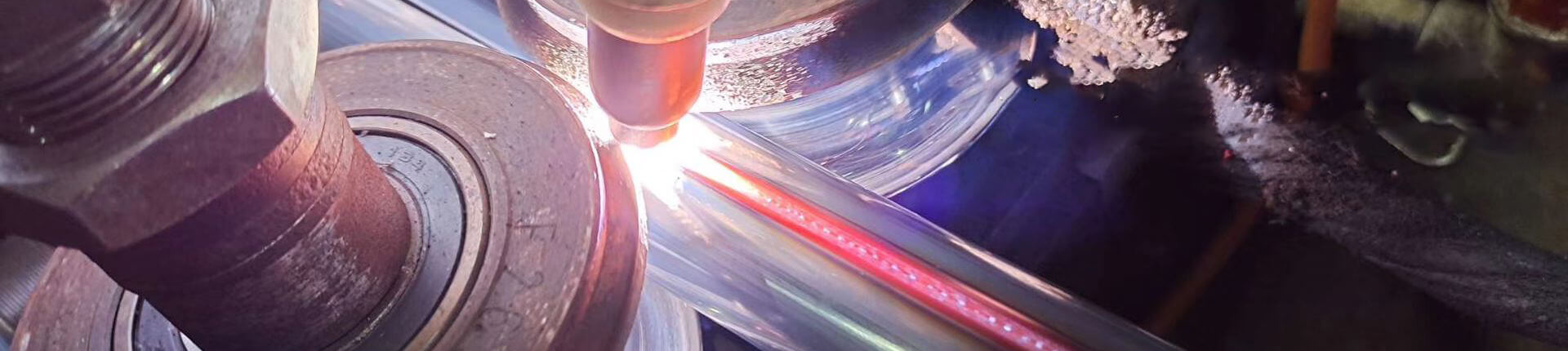


Selecting the right material specification determines the success of engineering procurement. Buyers frequently encounter confusion regarding which standard applies to their project. ASTM A554 remains one of the most referenced specifications in the metal industry, yet many misinterpret its actual boundaries. This specification governs welded austenitic, ferritic, and duplex stainless steel mechanical tubing. Engineers select this standard for applications where visual appearance, mechanical properties, and corrosion resistance take priority. Typical use cases encompass architectural structures, handrails, balustrades, and modern furniture frames. The manufacturing process involves forming flat-rolled steel into specific profiles and welding the seam without filler metal. The final output serves as a reliable structural component.

A common procurement mistake involves ordering mechanical tubing for fluid containment environments. This standard targets structural and ornamental applications exclusively. It completely omits the hydrostatic testing required to verify pressure containment capabilities. Because of this, engineers cannot safely use it for hot boiler services, chemical pipes, or marine fluid movement. Also, it misses the tight clean surface rules needed for sanitary spots. These spots include food packing or drug making plants. Picking mechanical tubing for the wrong jobs brings risks of system breaks and safety code violations.
The specification accommodates numerous material grades to match diverse environmental conditions. Supported materials include the versatile 304 series, the highly corrosion-resistant 316L, and cost-effective alternatives like 201. Chemistry control remains strict to ensure optimal performance.
When evaluating the SS 304 pipe standard within this framework, the specific ratio of chromium and nickel guarantees excellent resistance to oxidation. This chemical balance makes it a highly dependable choice for structural projects.
Mechanical tubing takes many physical forms, including round, rectangular, oval, and square profiles. The specification dictates permissible variations in outer dimensions, wall thickness, and straightness to ensure uniform assembly. Precision engineering on common stainless square tube sizes, like a 20×20 millimeter profile, maintains a tight outer dimension tolerance of plus or minus 0.13 millimeters. Wall thicknesses range from 1.0 millimeters to 1.5 millimeters for standard tasks. Straightness receives careful control, kept under 1.5 millimeters per meter, while corner radii stay below 2.0 millimeters to ensure sharp aesthetic lines.
The physical condition of the welded seam and the exterior finish serve as critical components. Buyers can specify that the internal weld bead remain in place, undergo height control, or face complete removal. Surface finishes remain highly customizable based on the final application. Options range from a basic annealed surface to highly polished reflective finishes. For luxury architectural projects, a polished mirror or brushed matte finish adds visual value. A standard polished surface achieves a roughness average of 0.8 micrometers or less, providing a premium look that resists scratches.
Approaching a stainless steel welded pipe manufacturer with exact parameters eliminates guesswork and prevents delivery delays. A complete request for quotation requires several specific details to ensure accurate production.
1.Exact material grade and alloy series.
2.Physical shape and specific outer dimensions.
3.Required wall thickness alongside acceptable tolerance limits.
4.Target length, such as standard 1.5-meter sections or custom cuts up to 6 meters.
5.Desired surface finish and specific internal weld bead treatment.
6.Specific end-use applications to verify the material aligns with the intended structural load.
Submitting these exact details ensures accurate pricing and rapid turnaround times.
Reliable structural production requires rigorous testing protocols before any material leaves the facility. At YUHUA, our manufacturing process incorporates advanced eddy current testing to verify the complete integrity of the longitudinal weld seam. Each production batch undergoes strict dimensional tolerance control checks to ensure outer dimensions, straightness, and corner radii meet exact project requirements. Surface quality inspections happen on every individual piece to guarantee a pristine appearance free of surface defects. Buyers receive mill test certificates verifying the material chemistry and mechanical properties. This meticulous approach guarantees high performance.

Understanding the engineering distinction between mechanical and pressure tubing prevents dangerous installation errors. While both specifications govern welded tubing, their intended working environments differ fundamentally. The mechanical standard focuses on dimensional accuracy, visual aesthetics, and structural support without requiring fluid containment tests. Conversely, ASTM A312 explicitly covers heavily cold-worked austenitic pipes intended for high-temperature and general corrosive pressure services. Pressure pipes undergo mandatory hydrostatic or nondestructive electric testing to ensure zero leakage under extreme internal strain. Interchanging these two materials poses massive safety risks and violates building codes.
Another frequent point of engineering confusion involves the difference between general structural tubing and high-purity fluid lines. ASTM A269 covers nominal-wall-thickness tubing designed for general corrosion-resisting and low-temperature or high-temperature service. Facilities utilize it in instrumentation lines and chemical processing requiring strict dimensional consistency for secure compression fittings. Mechanical tubing prioritizes external appearance and sheer load-bearing capabilities. While SS welded pipes can roll off the production line under either standard, the inspection criteria and internal surface purity requirements for the A269 standard remain significantly more stringent.
A: This specification accommodates a broad spectrum of dimensions to support complex structural designs. Common sizes range from smaller 20×20 millimeter profiles and 1-inch hollow tubes utilized in furniture frames, up to massive sections measuring 16 inches in outside dimension. Wall thicknesses scale upward based on the required load-bearing capacity. The standard provides specific permissible variations for each unique size bracket to maintain uniform consistency.
A: No. A responsible supplier will always advise that this standard exists exclusively for structural, mechanical, and ornamental purposes. It bypasses the mandatory hydrostatic testing required to safely certify a pipe for fluid containment. Utilizing mechanical tubing for pressure pipelines violates engineering safety codes and leads to severe system failures.
A: The chemical composition and baseline mechanical properties remain entirely consistent regardless of whether the material goes toward hidden machinery or visible architectural structures. The primary differences emerge during the finishing stages, specifically regarding the requested surface finish and weld bead treatment. Ornamental uses typically require a highly polished exterior, whereas concealed structural applications utilize a standard annealed finish.
A: Dimensional precision relies on advanced roll-forming and cold-reduction technologies. During the continuous manufacturing process, the steel undergoes gradual shaping and precise welding, followed by sizing passes that calibrate the final exact dimensions. Facilities implement strict quality control protocols to measure outer dimensions, wall thickness consistency, and overall straightness. Maintaining a tight corner radius below 2.0 millimeters remains essential for seamless integration.
A: Not every tubular product defaults to this single specification. YUHUA manufactures a diverse array of materials engineered for various industrial, decorative, and highly specialized environments. Certification remains strictly specific to the individual order, the chosen material grade, and the intended end-use application. Technical buyers must explicitly define their required specifications during the quotation phase to ensure compliance with appropriate regional engineering codes.
 Address: Muyuan Industrial Zone, Shishan Town, Nanhai District, Foshan City, Guangdong Province
 Call us now:+86 13751499396
 Email:546980277@qq.com


Foshan Nanhai Yuhua Hardware Products Co., Ltd.佛山市南海誉华五金制品有限公司