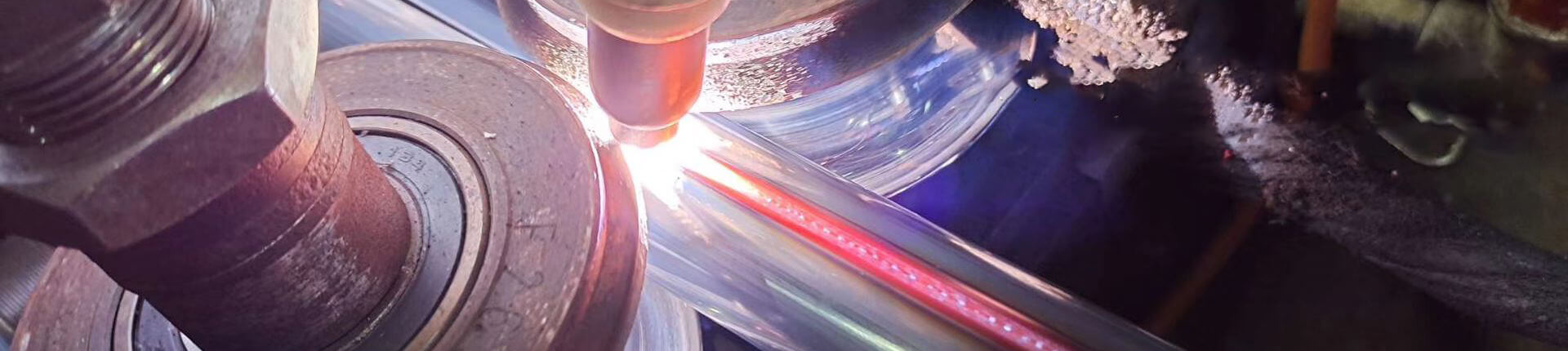


Making stainless steel welded pipes starts by picking the right stainless steel kind for the job. Common kinds include 201, 304, 316L, 410, and 430, each with perks like rust fight, toughness, and low cost. 304 Stainless Steel Pipes are one of the most widely used stainless steel products, known for their excellent corrosion resistance, high strength, and versatility.
Once the material is picked, stainless steel coils get a surface scrub to clear junk like oil, rust, and scale. This bit is vital for strong welds. The scrubbed coils are then sliced into strips of fit widths for next steps. Stainless steel welded pipe is a type of metal piping made from sections of stainless steel that are join together through welding.
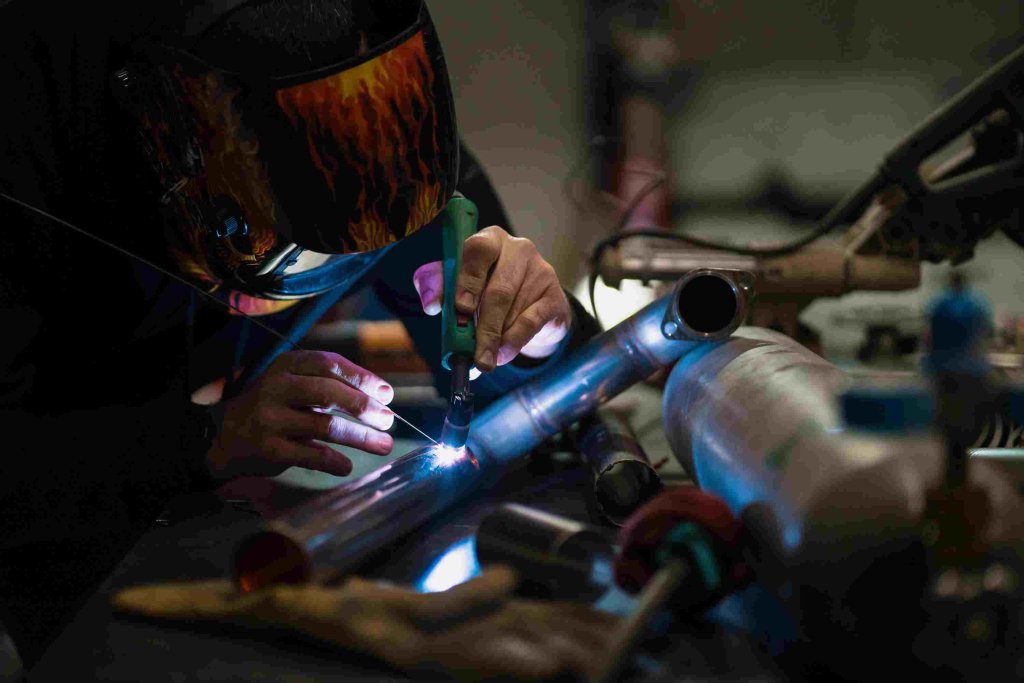
The sliced stainless steel strip gets bent into a round tube via cold roll machines. This cold bend keeps sizes even before welding. To connect the edges, folks often use high-frequency electric resistance welding (ERW) or Tungsten Inert Gas (TIG) welding.
Welding is a critical process in stainless steel pipe manufacturing, and 2025 has seen significant advancements in this area. After welding, the weld line gets cut inside and out for a smooth look that hits the needed quality marks.
After welding and bending, heat treatment—mainly annealing—is used to ease stresses from the bend and weld parts. Annealing also helps up rust fight and make the pipe more bendy.
Controlled cool comes after annealing to keep the wanted structure and traits of the pipe.
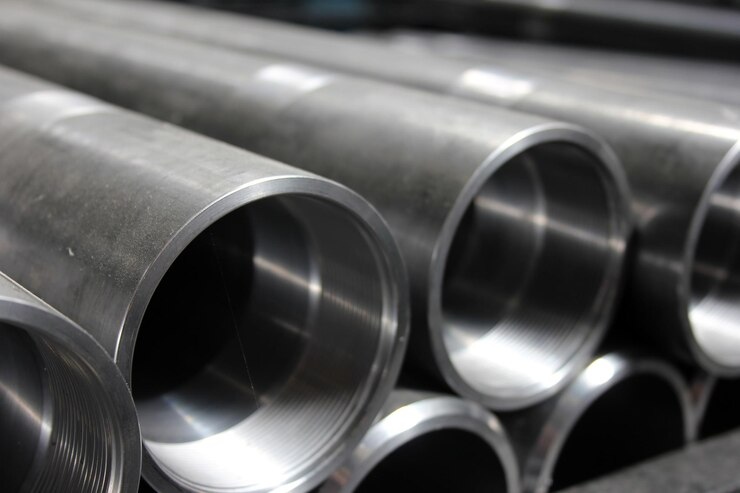
To hit exact size rules, sizing rollers get used to tweak the outer width of the pipe. These rollers push even to get same width all along.
Straightening tools come next to remove any curves or twists from prior steps, keeping straight along the pipe’s path.
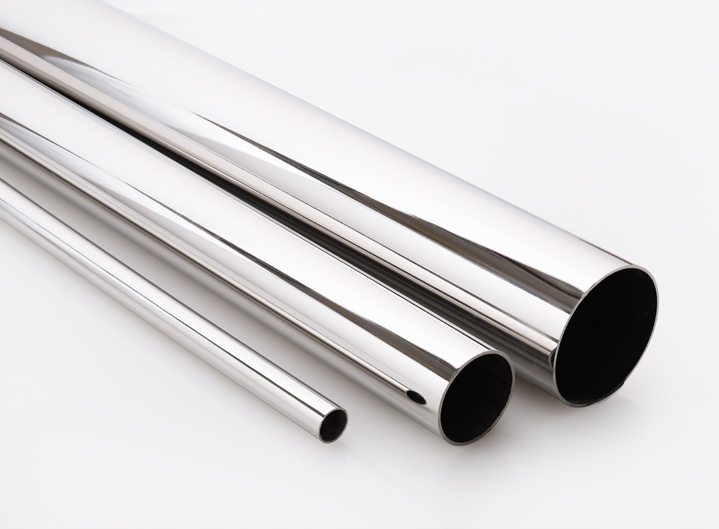
Surface end gets better via polish and pickling that clear weld color and dump surface junk. Electro-polish gives a smooth, shiny end that ups rust block of stainless steel pipes.
Last passivation makes a shield oxide coat on the pipe’s face, boosting its rust block and giving a good appearance. Stainless steel has a metallic luster, beautiful appearance, suitable for decoration and other fields.
To check weld strength, no-harm tests like ultrasonic testing (UT) and eddy current testing (ECT) get used. These spot under flaws without hurt to the product.
Plus, eye looks are done by skilled people to judge weld sameness and surface shape. Eddy current testing for weld integrity is commonly employed as a standard practice in quality control.
Tuned tools get used for steady measure of outer width, wall thick, oval form, and straight. Go/no-go tools let fast check vs limits to make sure each pipe fits rules.
Stainless steel welded pipes must match world rules like ASTM, ASME, DIN, or ISO based on buyer wants. For instance, ASTM A554 SUS304 stainless steel is a high-performance material renowned for its exceptional corrosion resistance, durability, and aesthetic appeal.
Makers give Mill Test Certificates (MTCs) listing chemical mix and mechanical traits for track and sure.
Rust block is core to stainless steel pipe do. Types like 304 and 316L pack chromium to make a passive oxide coat that stops rust.
After weld heat treat then passivation aids fix this oxide coat at weld spots, keeping even rust shield all over.
Hydrostatic test gets done to mimic real pressures by filling the pipe with water and push without break. Pneumatic test with air or inert gases may get used when water test not doable.
These tests aid prove that the pipes can handle work loads without leaks or fail.
Each pipe gets carved with unique heat number tied to digital notes with details on raw stuff source, make settings, and quality outcomes. This track system keeps account through all make parts.
Buyers get Mill Test Certificates (MTCs) showing chemical mix and mechanical traits with check notes proving follow rules like ASTM or ISO. Mill test certificates provided offer transparency and build customer confidence.
We at YUHUA have been a go-to stainless steel welded pipe maker since 2009, working from Foshan City’s Nanhai spot.
With our own factory line and skilled engineering team, we deliver custom fixes tailored to client needs. Our products meet ISO 9001 standards, backed by 10 patents and Sedex certification. Our production setup, quality, output and market growth match global standards.
We take pride in mixing old craft with new tech to always deliver high-quality stainless steel pipes at good prices.
Our 316L stainless steel welded pipes are ideal for chem process gear where rust block is vital. 316L Stainless Steel Round Pipes are a top choice for industries requiring exceptional corrosion resistance, durability, and performance in harsh environments.
Our decorative-grade 201/304 pipes suit build structures needing both looks and tough. Stainless Steel Decorative Pipes – 201/304 Grade, Rustproof, for Luxury Architectural Projects illustrate our commitment to quality design.
We offer clean piping systems fabricated from food-grade 304 stainless steel that comply with sanitation regulations. It has good processability and weldability.
A: Welded pipes are made by joining stainless steel strips through welding, while seamless pipes are produced from solid billets. Welded pipes are generally more cost-effective and suitable for applications where high pressure is not a primary concern.
A: Look for mill test certificates (MTC), check compliance with international standards (like ASTM or ISO), inspect surface finish, weld uniformity, and ask if non-destructive testing has been performed.
A: Minimal maintenance is needed. Regular cleaning helps prevent buildup of contaminants. In corrosive environments, periodic inspection ensures long-term performance.
 Address: Muyuan Industrial Zone, Shishan Town, Nanhai District, Foshan City, Guangdong Province
 Call us now:+86 13751499396
 Email:546980277@qq.com


Foshan Nanhai Yuhua Hardware Products Co., Ltd.佛山市南海誉华五金制品有限公司