

Navigating the global supply chain in 2026 requires procurement managers and engineers to strategically balance cost optimization with rigorous material integrity.
China continues as a major player in metal production. The country provides vast output capacity and affordable prices for industrial goods. Bringing in metal tubing from abroad creates built-in dangers. These dangers can threaten whole engineering projects if managers do not handle them well. Substandard materials can lead to catastrophic failures in high-pressure systems, structural weaknesses in architectural projects, and severe corrosion in marine environments.
This guide offers a full technical plan for obtaining top-grade stainless steel pipes, which helps to remove quality dangers in buying across borders.
The biggest danger in metal buying comes from dishonest suppliers who swap high-grade items for cheaper options.
Buyers who pay for grade 304 goods may get 201 series items without knowing.
Grade 201 uses a lot of 5.5 to 7.5 percent manganese. It has just 3.5 to 5.5 percent nickel. This makes grade 201 prone to rust in tough conditions.
Authentic Grade 304 stainless steel must contain 8.0% to 10.5% nickel and 18% to 20% chromium to ensure its characteristic oxidation and corrosion resistance.
For harsh settings, buyers who choose 316L must confirm that 2.0 to 3.0 percent molybdenum exists. Dishonest makers often skip this key element to reduce expenses.
A common problem involves suppliers who make tubes thinner than ordered to cut raw material use. A line that needs 1.5mm wall thickness may show up at only 1.2mm. This weakens the tube’s power to handle the inside fluid force.
Expert building uses demand exact size steadiness for good fitting and joining during setup. Permissible outside diameter (OD) tolerances should be maintained within ±0.13mm for standard geometries. Any shift over a 10 percent wall thickness change can cause machine breakdowns in hard work conditions.
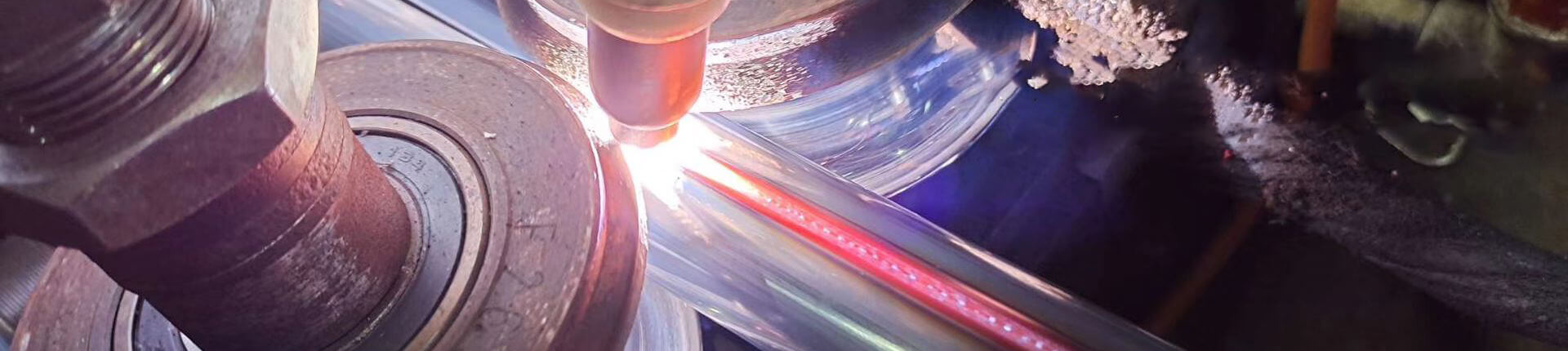
The strength of a joined seam sets the full life of the pipe network. Weak joining methods create tiny holes, soft links, and carbide buildup. These issues lead to spot rust as time passes.
Surface treatment matters a lot for looks and cleanliness. Factory parts for food handling or drug making need even surface treatment to stop germ buildup. High-quality annealed surfaces must achieve a Roughness Average (Ra) of 0.8 μm or less to comply with premium manufacturing standards.
Solid material buying rests on strict records and chemical checks. Each delivery requires a real Mill Test Certificate. The certificate lists the true chemical makeup of the lot. Engineers must check that carbon in 316L types stays under 0.03 percent. This ensures the best joining ability. The certificate must confirm physical traits along with the chemical details. A fitting lot of 304 tubing must show a pull strength of at least 515 MPa. It also needs a yield strength of 205 MPa to secure building strength.
Listing world production rules in the order removes confusion about quality needs. Rules like ASTM A554 set the clear making steps, check methods, and chemical bounds for building uses.
Dealing with a supplier who knows and follows these rules is key to safe buying. YUHUA stands out here. YUHUA makes sure production, quality checks, and results match strict world rules like ASTM, AISI, EN, BS, GB, DIN, and JIS. we hold ISO 9001 and Sedex certifications. As a national high-tech company, we ensure every rectangular, square, or round tube from the plant fits the legal needs of the local market.
Telling a real maker from a trade middleman forms the first move in building a strong supply line.
Trade firms often send work to many small shops. This causes uneven quality and hard-to-track material sources. Linking with a direct factory gives clear talk on tech details and a firmer hold on delivery times.
YUHUA exemplifies a reliable manufacturing partner, integrating robust production capabilities with stringent quality oversight. Operating our own dedicated factory line with a highly skilled team of engineers allows YUHUA to whip up custom products efficiently while securing 10 industry patents that highlight our deep technical capabilities.

A dependable maker must have on-site check tools to prove products before sending. Eye checks alone fail to spot inside join flaws or tiny material issues. The plant must use eddy current testing to check join strength in all linked goods. Pressure water testing setups are required for parts meant for liquid carrying. Tight size limit control and single-piece surface checks show a grown making flow.
Outside checks give calm when working with foreign groups. Buyers should ask for proof of outside testing skills from known groups like SGS or BV. Having an ISO 9001 certification shows the plant runs a set and recorded quality system. Asking for material test certificates from past export lots can help judge the supplier’s knowledge of world trade rules.
A planned check system forms the last shield against getting unfit items.
Pre-production inspections ensure that the raw steel coils meet the correct chemical grade before manufacturing begins.
During-production inspections monitor the forming, welding, and cutting processes to catch dimensional errors early.
Pre-shipment inspections serve as the ultimate clearance, verifying straightness, corner radius accuracy, and overall mechanical integrity before container loading.
Improper packing can damage fine materials on a long sea trip. Sea water dampness seeps into normal shipping boxes. This makes a very rusting space for metal loads.
Suppliers must use full sea-safe packing steps to keep the metal in top shape. Tubes need tight wrapping in waterproof paper. Steel strip packing must hold them firmly. Regular export sea-safe packs should fit all transport types. These packs guard against hits and harm from the surroundings.
Picking the proper shipping terms affects the total cost at arrival and the risk of the load.
Free On Board terms work well for heavy factory goods. These terms let buyers manage sea shipping and get better rates from their own shipper.
Cost Insurance and Freight offers ease but can lead to high fees at the end if the supplier picks a gain-focused ship agent.
Procurement teams must meticulously evaluate the trade-off between operational convenience and supply chain control when importing heavy industrial components.
World shipping paths still face surprise holdups and flow blocks. Wise buyers cut these dangers by spreading supplier choices and planning material needs far ahead. Setting clear talk on the lowest order amounts and exact making times is crucial. Forming a lasting link with a steady maker secures top-making slots in busy seasons.

Getting top factory goods from abroad calls for watchfulness, tech know-how, and smart supplier picks. By requiring chemical proof, setting firm size limits, and joining with certified direct plants, buyers can fully remove the risks of low-grade parts. Using strict quality checks and listing sea-safe packing makes sure materials reach ready for quick engineering work. Always handle world buying with exact tech details instead of loose item outlines.
A: Lead times usually fall between 20 and 35 days for basic making runs based on the grade and sizes needed. Custom shapes or special surface treatments like mirror polishing or annealing may add one more week to the making plan. Sea freight travel then adds 15 to 45 days based on the end port.
A: The best way involves hiring an outside inspection firm to do Positive Material Identification testing at the plant. This no-damage test uses a portable spectrometer to check the metal’s chemical makeup right away. Buyers should also require an official Mill Test Certificate to match the chromium, nickel, and molybdenum amounts to world rules.
A: For building and decor tubes under the ASTM A554 rule, the field norm allows wall thickness limits of plus or minus 10 percent of the named thickness. Outer size limits prove stricter. They often demand accuracy within plus or minus 0.13mm for small shapes to ensure a smooth fit into building frames.
A: Yes, bringing metal goods into Western areas often brings special trade fees and anti-dumping costs based on the source land and the exact material code. Buyers must talk to a licensed customs agent to sort their specific machine-building parts correctly. Keeping up with current trade rules is key to figuring out the real cost of landing.
 Address: Muyuan Industrial Zone, Shishan Town, Nanhai District, Foshan City, Guangdong Province
 Call us now:+86 13751499396
 Email:546980277@qq.com


Foshan Nanhai Yuhua Hardware Products Co., Ltd.佛山市南海誉华五金制品有限公司