

Selection of suitable metal tubing takes place for industrial projects. This choice needs close checks on material properties, environmental conditions, and budget limits. Stainless steel products rank high in daily use. Stainless steel products give good corrosion resistance. Stainless steel products also fight erosion from many chemicals. Alloy compositions differ and shape how each SS pipe grade handles specific stresses. This guide compares the most common grades in an objective way. The comparison helps procurement managers and engineers pick materials with clear knowledge.
Basic differences in performance among steel grades come straight from elemental makeup. Chemical composition sets microstructural classification. That classification then shapes mechanical limits and oxidation resistance.
Grade 201 serves as an economical alternative to traditional austenitic grades. Makers reach this cost level by swapping much of the nickel for manganese and nitrogen. Typical composition of 201 shows chromium from 16.0 to 18.0 percent, manganese from 5.5 to 7.5 percent, and nickel from 3.5 to 5.5 percent. This balance gives solid resistance to rust and oxidation in moderate environments.
Grade 304 sets the industry standard for austenitic alloys. Composition of Grade 304 features high chromium and nickel content. Levels usually run 18 to 20 percent chromium and 8 to 10.5 percent nickel, with carbon capped at 0.08 percent. The richer mixture supplies stronger resistance to rust, oxidation, and harsh environments.
Grade 410 works as a martensitic alloy. This grade features lower chromium content and minimal nickel. Specific elemental percentages for 410 suit distinct applications like durable closet rods for modern wardrobes. Primary attribute lies in the ability to harden through heat treatment. Heat treatment delivers high strength for long-lasting performance.
Evaluating these materials requires looking beyond the chemical sheet and analyzing how they perform in real-world scenarios. The following table provides a quick reference for mechanical properties of popular grades based on standard data.
| Grade | Tensile Strength | Yield Strength | Elongation |
| 201 | ≥ 655 MPa | ≥ 310 MPa | ≥ 40% |
| 304 | ≥ 515 MPa | ≥ 205 MPa | ≥ 40% |
| 316L | ≥ 485 MPa | ≥ 170 MPa | ≥ 40% |
Oxidation stands as the primary failure mode for metal installations in humid or chemical environments. Grade 304 offers superior performance in this category due to higher nickel content. Higher nickel content makes the grade less affected by acids or alkalis in the atmosphere. Projects demanding reliable rust prevention often select grade 304 stainless steel pipes. Grade 304 stainless steel supplies superior corrosion resistance and durability. High chromium-nickel content ensures excellent performance in various environments. Compliance provides a uniform, smooth surface. The surface supports better welding and fabrication. Grade 201 pipe supplies decent resistance in moderate conditions. Grade 201 may fall short for severe outdoor or coastal exposure.

Structural integrity under load forms the primary concern. Mechanical properties dictate the choice. Grade 201 offers excellent mechanical properties. Grade 201 pipe suits structural and load-bearing applications. Higher yield strength compared to standard austenitic grades allows thinner wall profiles. Thinner profiles keep rigidity intact. Specific interior applications require high strength for long-lasting performance. Home organization and hotel wardrobes represent such cases. The Stainless Steel Wardrobe Rail Pipe comes from high-grade 410s/430 stainless steel. This material choice supports heavy clothing and accessories without bending.
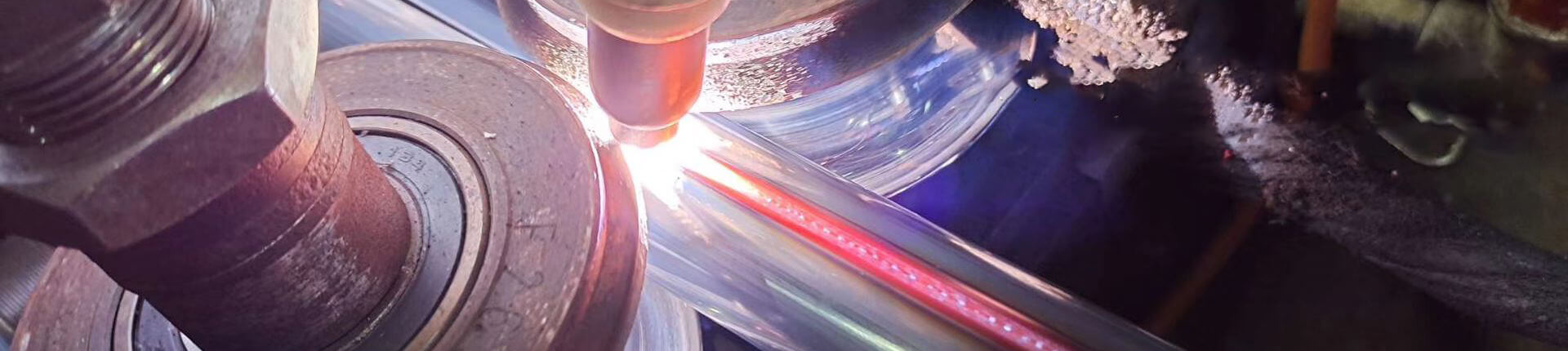
Ease of cutting, forming, and joining directly affects project timelines and labor costs. Grade 304 pipe features excellent weldability and formability. Excellent weldability and formability make it ideal for custom designs and modifications. Grade 201 also welds and fabricates with ease. YUHUA ASTM A554 stainless steel welded tubes deliver premium quality for architectural and decorative applications. These tubes gain from state-of-the-art TIG welding technology. Strict quality control runs at every production stage. We add eddy current testing for weld integrity and supply mill test certificates. These steps confirm that tubular products meet rigorous engineering demands. Demands include a safe, stable structural foundation.
Matching material to exact industry requirement prevents overspending on unnecessary specifications. Matching also avoids premature material failure.
Marine industry, chemical processing, and pharmaceuticals demand materials that withstand aggressive corrosive agents. Grade 316L shows high resistance to pitting, crevice corrosion, and chemical exposure. High resistance makes Grade 316L ideal for applications in marine, chemical, and pharmaceutical industries. Grade 316L pipe sees frequent use on offshore platforms and desalination plants.
Architectural structures, decorative elements, and indoor furniture benefit from Grade 201 pipes. Grade 201 pipe offers a reliable and affordable solution. Grade 201 appears often in handrails, balustrades, and structural frameworks. Frameworks face conditions where extreme moisture is absent. Grade 201 pipe also sees wide application in production of various cases and strap case covers.
Food and beverage processing equipment requires high hygiene. Part of the 304 stainless steel qualifies as food-grade stainless steel. Food-grade stainless steel supports food production equipment. Surface of stainless steel stays smooth and clean. Smooth surface resists dust and dirt absorption. Smooth surface also simplifies cleaning and maintenance.

YUHUA maintains a commitment to global standards and operates its own factory line alongside a skilled team of engineers. Operation enables production of custom products for customers. We have secured ISO 9001 and Sedex certifications. We have obtained 10 patents and have earned status of a national high-tech company. Attention to product quality and market changes allows YUHUA to supply customers with high-quality products at fair prices.
A: Distinguishing between Grade 201 and 304 purely by visual inspection proves highly impractical. Both materials accept identical aesthetic standards. Standards include mirror, brushed, or matte finish. Both materials display metallic luster and beautiful appearance. Appearance suits decoration. Accurate determination of the alloy requires chemical testing kits. Kits react to molybdenum or manganese levels. Procurement teams should request proper mill test certificates from the manufacturer, which verify exact chemical composition before installation.
A: Grade 201 includes chromium along with manganese. This mix gives good protection against rust and oxidation when conditions stay moderate. Exposure to outdoor settings brings high humidity along with rain or salt air from the coast. Grade 201 then shows greater tendency for surface oxidation under these conditions. Grade 304 stands apart with elevated levels of chromium and nickel. The material delivers better protection from rust along with oxidation and tough surroundings. Outdoor uses call for Grade 304 as the better option, supporting extended use with little need for upkeep.
A: Grade 201 costs less than 304 or 316 stainless steel. Lower cost still delivers reliable performance. The price discrepancy is primarily driven by the global nickel market. Grade 304 requires 8 to 10.5 percent nickel. Grade 201 utilizes only 3.5 to 5.5 percent nickel. Raw material costs for Grade 304 ,therefore, stay inherently higher. Projects with strict budget constraints and minimal environmental exposure treat 201 pipe as a highly cost-effective alternative.
A: Both alloys work easily in a fabrication setting. Grade 304 shows excellent weldability and formability. Excellent weldability and formability make Grade 304 ideal for custom designs and modifications. Grade 201 also supports custom designs and modifications. Support comes from easy welding and fabrication characteristics. Higher yield strength of Grade 201, at or above 310 MPa, compared to Grade 304 at or above 205 MPa, requires slightly more mechanical force for bending or forming. Standard TIG welding technology can be applied effectively to both materials, provided the correct engineering procedures and filler metals are selected.
 Address: Muyuan Industrial Zone, Shishan Town, Nanhai District, Foshan City, Guangdong Province
 Call us now:+86 13751499396
 Email:546980277@qq.com


Foshan Nanhai Yuhua Hardware Products Co., Ltd.佛山市南海誉华五金制品有限公司