

| Factor | 304 pipe | 316 pipe | 316L pipe |
| Corrosion resistance | Good in many mild environments | Better in chloride and chemical service | Similar to 316, with advantages after welding |
| Molybdenum | Normally none | Commonly 2 to 3 percent | Commonly 2 to 3 percent |
| Carbon limit | Higher than 316L | Higher than 316L | Maximum 0.03 percent |
| Typical use | Furniture, food equipment, and general piping | Coastal and chemical systems | Welded sanitary, marine, and process lines |
| Cost position | Usually the lowest | Usually above 304 | Often close to 316 |
This comparison is a starting point and not a definitive specification for use. A dry indoor handrail may be adequately served by Type 304, whereas a welded component exposed to coastal salt deposition may justify Type 316L or a more corrosion-resistant grade after chloride exposure, wetness, temperature, surface finish, cleaning, and maintenance have been evaluated.

Austenitic grades are available for round, square, rectangular, welded, and seamless pipe.
Grade 304 has good formability, weldability, and general corrosion resistance. 304 tubing is used in construction, food processing, furniture, handrails, machinery and decorative work.
The 316 grades have added molybdenum to increase their pitting resistance. The low-carbon version of 316 is 316L.
The differences among the three grades of stainless steel are largely due to differences in alloy content and not in appearance.
The presence of molybdenum in 316 and 316L makes them more corrosion-resistant than 304, particularly with localized attacks. For piping in seawater, salt air exposure, dealing with chlorides and other aggressive process solutions, 316/316L is superior.
The lower carbon content of 316L reduces the risk of chromium carbide precipitation during welding. This helps protect corrosion resistance around the heat-affected areas of welded joints.
Instead of relying on printed grade labels on supplied material, buyers should request a mill test certificate which confirms the chemical composition, the heat number and the full material traceability.
Grade 304 stainless steel is resistant to a wide variety of conditions and will perform well under most indoor, freshwater, food handling and architectural applications. However, exposure to salt spray, stagnant solutions of chlorides, harsh cleaning solutions and poor drainage can cause unsightly staining or pits.
The most suitable starting grades for coastal and marine applications, for chemical processing, for desalination plants, etc are 316 and 316L. In addition to the above applications, YUHUA also offers 316L round pipe for pharmaceutical, oil and gas, food and beverage, high purity, etc applications.

Corrosion control is not just a function of selecting the proper material to resist corrosion. Surface condition, weld treatment, system design, drainage and maintenance all play important roles as well. A surface that has been polished or pickled is much easier to clean and resists contamination from corrosive materials far better than a surface that has been allowed to develop roughness or damage.
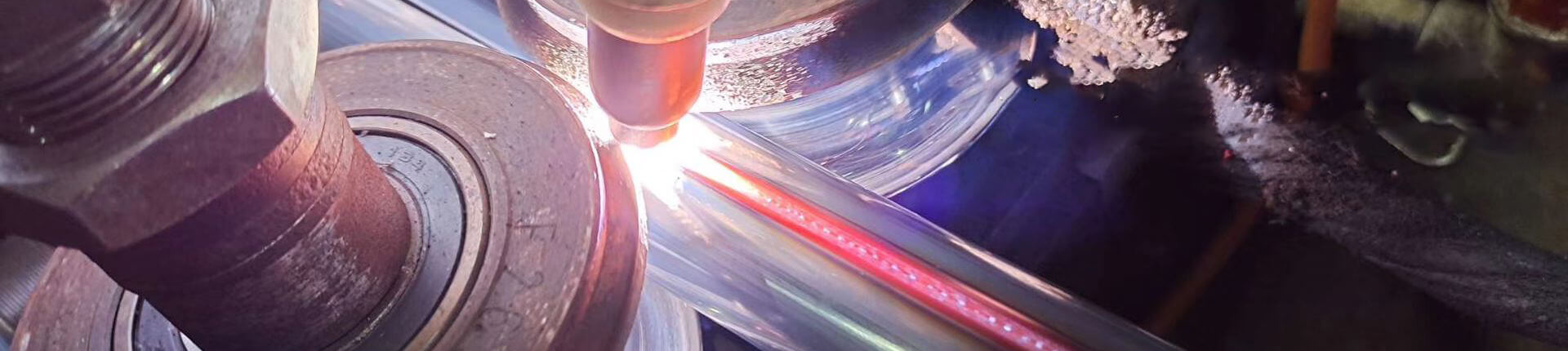
All three grades can be welded with the appropriate procedure and filler metal.
304 welded tube can be suitable for decoration, furniture, general indoor uses, etc. However, for chemical or sanitary applications where there are many circumferential welds, 316L is preferred because of its low carbon content.
In cases where the corrosion performance of the item is a critical factor, all heat tint, weld discoloration and surface contamination should be removed from the fabricated item. The required surface finish should also be specified on the purchaser’s purchase order.
The information of YUHUA products regarding finish includes bright, pickled, annealed, brushed, matte, mirror, and polished finish for all kinds of pipes and tubes. Finish available should refer to the product and standard being selected.
The mechanical values of the steels are governed by the relevant technical standard, the product form, the wall thickness and the heat treatment.
For use at pressure or elevated temperature, the following information should be supplied by the buyer: design code; working pressure; operating temperature; outside diameter; and pipe schedule. Decorative tubing must not be used as a substitute for pressure pipe unless specifically approved by the engineer.
304 for a mild to moderately corrosive environment, cost sensitive with flexibility.
Typical uses include:
*Indoor handrails, furniture, and display frames
*Food equipment under controlled cleaning conditions
*Machinery guards and equipment structures
*Architectural and decorative tubing
*Freshwater or low chloride systems after technical evaluation
YUHUA also supplies 304 products in round and square form with detailed specifications on sizes and surface finishes. Most projects are specified with Grade 304 as it is generally considered suitable unless there is to be constant exposure to salt or other aggressive chemicals.
316 for situations where 304 may not be reliable due to exposure to Chloride or chemicals, but no low carbon requirements for the project.
This alloy could be used in coastal applications such as outdoor equipment and buildings exposed to salt spray, as well as for the handling of chemicals and other industrial applications where pitting resistance is required.
The material premium for a more corrosion-resistant grade of material must be compared with the cost of maintenance and replacement. For some applications, a higher cost material may be economic because of the high cost of repair, shutdown, and particularly of access to installed pipe.
316L would be the appropriate material where a corrosion-resistant material is to be used in conjunction with extensive welding, sanitary fabrication, or high-purity service.
Common market sectors for this machinery and equipment include pharmaceuticals, food and beverage processing, marine systems, chemicals, and oil and gas equipment.
The fabricator of this plant, which is near the coast, required a number of field welds for this process line, which was to be subject to regular washdowns. A suitable procurement specification would be to specify 316L with heat number identified, together with post-weld cleaning, as opposed to just specifying the lowest-cost material.
Seamless pipe is usually chosen for critical applications involving high pressure and/or temperature, while welded pipe provides a cost-effective solution for many general industrial, architectural, structural, and decorative applications. The project Standard and engineering design determine the appropriate method of construction.
A round tube is generally preferred for projects such as fluid transport and pressure systems. Square and rectangular tubes are often used for making furniture, the frames for doors and windows, handrails, machinery guards, structural supports, and architectural features.

A complete request for quotation should include:
*Material grade, standard, welded or seamless construction.
*The shape, the outside dimensions, and the wall thickness or schedule.
*Required length, quantity, finish, and dimensional tolerances
*Testing, certificates, traceability, packaging, and delivery details
YUHUA stainless steel pipes follow standards for different products: ASTM A554, ASTM A312, ASTM A269, ASME SA312, AISI, JIS, EN, DIN, GB. In addition to mill certificates, tubes can be supplied with results from eddy current testing, hydrostatic pressure testing as well as with material traceability.
When comparing prices of tubing, look at the total cost of ownership rather than just the price per meter. While the cost of the material may be lower for one material than another, the cost of fabrication, polishing, welding labor, inspection, maintenance, down time and replacement risk may be greater than the initial cost savings of the material.
Use the following selection process:
| Project condition | Practical starting point |
| Indoor decorative or furniture use | 304 |
| General food equipment | 304 or 316L, depending on cleaning chemicals |
| Coastal or salt exposed installation | 316 or 316L |
| Welded chemical or sanitary line | 316L |
| Pressure or high temperature service | Engineer selected grade and standard |
When requesting a quote for a specific part, please also provide YUHUA with the detailed dimensional information and the working conditions, so that we can quote a more accurate price that suits your real application needs, rather than a generic material price.
A: Grade 304 is a general-purpose chromium-nickel stainless steel. Grade 316 has added molybdenum for corrosion resistance to chlorides and other aggressive compounds, with good resistance to pitting and crevice corrosion. Grade 316L has a lower carbon content than 316 and is therefore recommended for most welded applications.
A: No. Grade 316L is generally recommended for applications where there is to be a lot of welding or post weld corrosion resistance required. For some nonwelded or less demanding applications, Grade 316 may be suitable.
A: Grade 304 is corrosion-resistant, but not corrosion-proof. Salt, aggressive chemicals, iron contamination, surface damage, or poor cleaning can cause staining or localized corrosion.
A: Yes, they can be welded provided an adequate welding procedure and suitable filler material are selected. However, an Engineer must consider the Service Chemistry, Corrosion resistance, Design Code & Performance of mixed grade assembly.
A: The added molybdenum and alloy content in these products increase the raw material cost. In addition to the molybdenum and alloy content, the cost of the pipes also depends upon the following factors: the pipe size, thickness, whether the pipe is seamless or welded, finish, testing, and other factors. For small orders, the cost will be higher than for larger orders. Market conditions will also affect the price.
 Address: Muyuan Industrial Zone, Shishan Town, Nanhai District, Foshan City, Guangdong Province
 Call us now:+86 13751499396
 Email:546980277@qq.com


Foshan Nanhai Yuhua Hardware Products Co., Ltd.佛山市南海誉华五金制品有限公司