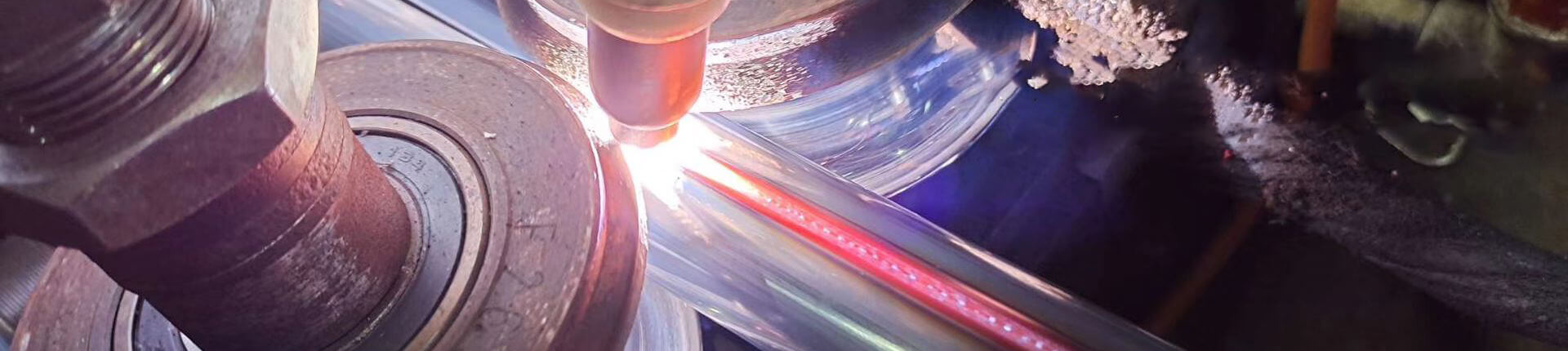


When specifying stainless steel rectangular pipe, factor in the pipe’s grade, thickness, finish, fabrication method, tolerance and end use to arrive at the best combination of performance and cost.

First, define what the tube must do after installation. A decorative frame carries different requirements than a machinery support, handrail component, equipment frame, or architectural element.
Before selecting a grade or thickness, confirm these points.
1.whether the tube is structural, mechanical, architectural, or decorative;
2.whether it will be used indoors or outdoors;
3.whether it will face moisture, salt, chemicals, heat, or industrial contaminants;
4.whether it will be welded, bent, drilled, cut, or polished;
5.whether appearance or load resistance is the main priority.
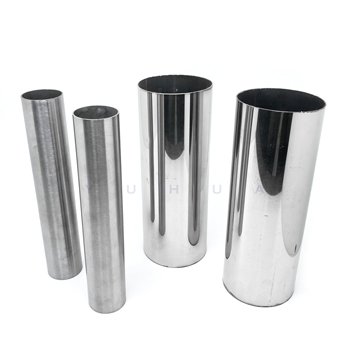
YUHUA rectangular pipe options can be supplied with bright, pickled, polished, or annealed surfaces. Inspection options can include MTC and third-party requirements, such as BV or SGS, when specified.
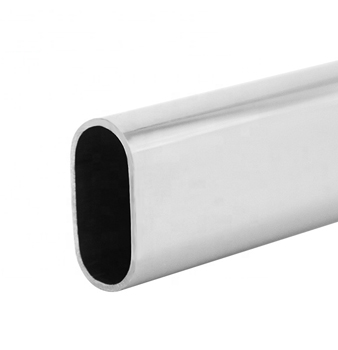
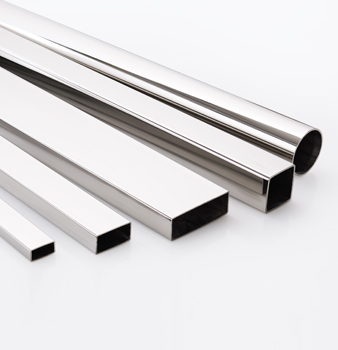
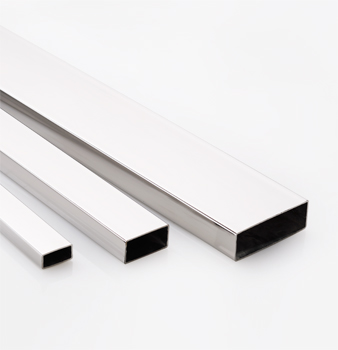
Rectangular tubing can be useful in applications that require broad, flat surfaces, directional stiffness, or low-profile sections. Rectangular tubing also provides useful surfaces for mounting panels, brackets, etc., and for welded connections.
| Shape | Main advantage | Typical reason to choose it |
| Rectangular | Wide flat faces and directional geometry | Frames, supports, furniture, architectural parts |
| Square | Balanced geometry | General frames and symmetric structures |
| Round | Smooth continuous profile | Fluid systems, rails, curved designs |
When the design needs a flat mounting face or a narrow profile, rectangular tubing can simplify fabrication and installation.
304 serves as a widely used chromium-nickel stainless steel that balances corrosion resistance, fabrication, and cost. The grade receives common consideration for furniture, handrails, equipment frames, architectural details, and many indoor or moderately exposed outdoor projects. YUHUA’s 304 tubing range includes polished and annealed surface options.
304L features lower carbon content and often receives preference when extensive welding occurs because lower carbon content reduces the risk of sensitization around welded areas.
Where chloride exposure, marine conditions, chemical processing, or aggressive cleaning occurs, 316 or 316L may prove more suitable. Molybdenum improves resistance to pitting and crevice corrosion in many chloride-bearing environments.
| Service condition | Grade commonly considered |
| General indoor fabrication | 304 / 304L |
| Mild outdoor exposure | 304 / 304L |
| Coastal or chloride exposure | 316 / 316L |
| Chemical or frequent-cleaning environment | 316 / 316L, subject to compatibility |
Rectangular tube dimensions normally appear as width × height × wall thickness. Width and height influence stiffness, available connection area, visual proportion, and fit with surrounding components.
Check the span, load direction, joint design, installation space, and mating parts before finalizing dimensions.
A thicker wall can increase strength and stiffness. The thicker wall also increases weight, material use, welding input, and cost. The target remains the thickness that satisfies the engineering requirement without unnecessary mass.
A practical sequence is:
1.determine design load and acceptable deflection;
2.choose outside dimensions that fit the assembly;
3.verify the required wall thickness;
4.confirm compatibility with welding, bending, or machining;
5.review total weight and material cost.
Case example: a fabricator building a visible equipment frame may find that two sections fit the same space. When the load stays light, the heavier option may add cost without improving the finished assembly. For higher stiffness, impact resistance, or deeper machining, the thicker wall may become justified.
The project specification should determine the applicable standard. YUHUA rectangular stainless steel products can be supplied to AISI, ASTM, EN, BS, GB, DIN, and JIS requirements. The welded tube range also includes ASTM A554 options for architectural, decorative, and structural uses.
For an RFQ, do not state only “ASTM stainless tube.” Include grade, dimensions, wall thickness, finish, tolerance, length, inspection requirements, and end use.
Surface finish affects appearance, cleanability, fabrication, and maintenance. Bright or polished surfaces suit visible parts. Pickled or annealed surfaces may be selected for fabrication or industrial use.
We offer bright, pickled, polished, and annealed conditions. Selected welded tube products can also be supplied with mirror, brushed, or matte finishes.
Think about downstream work before choosing the finish. A highly polished tube that requires extensive welding may need refinishing afterward. The refinishing adds labor and processing cost.
Before ordering, confirm Fabrication details such as cut lengths, tolerance, corner geometry, weld type, straightness, bends, hole positions, etc., and surface protection.
Even two apparently identical tubes can have different fits into the same hole if the tolerances and the corner radii of the ends have not been agreed in advance. This can save a lot of rework if agreed before production and will result in a better assembly in the end.

A suitable supplier should consistently match the specifications. Buyers should ask how material grade, dimensions, weld quality, surface condition, and inspection are controlled.
For YUHUA stainless tubing, quality options include eddy current testing for weld integrity, material traceability, mill test certificates, and dimensional or surface inspection.
For export orders, YUHUA rectangular pipe can be packed with waterproof paper and steel strapping in export seaworthy packaging, or according to agreed requirements.
A complete RFQ reduces specification errors and speeds up quotation. Send these details:
1.application or drawing;
2.stainless steel grade;
3.width × height;
4.wall thickness;
5.length and quantity;
6.surface finish;
7.applicable standard;
8.dimensional tolerance;
9.cutting, welding, bending, or other processing needs;
10.inspection, packaging, and destination requirements.
When one item remains uncertain, share the operating environment and end use so practical options can be discussed before quotation.
A: Base the wall thickness on load, span, acceptable deflection, members’ cross-section dimensions, method of fabrication, and project conditions. Thickening the walls increases their stiffness but also their weight and their material cost.
A: Sizes are normally specified by width × height × wall thickness, with length added separately. Availability depends on grade, manufacturing method, finish, and order requirements, so drawings or exact dimensions prove useful when requesting a quote.
A: In commercial searches, the terms often receive interchangeable use. In engineering practice, “tube” is more commonly specified by exact outside dimensions and wall thickness, while “pipe” remains traditionally associated with nominal sizes for fluid service. Follow the project specification.
 Address: Muyuan Industrial Zone, Shishan Town, Nanhai District, Foshan City, Guangdong Province
 Call us now:+86 13751499396
 Email:546980277@qq.com


Foshan Nanhai Yuhua Hardware Products Co., Ltd.佛山市南海誉华五金制品有限公司