

When engineers, project managers, and procurement officers choose materials for industrial, architectural, or commercial piping projects, they must select the proper metal alloy. This choice remains critical to the long-term performance and safety of the completed structures. The discussion of stainless steel 410 vs 304 often comes up in these professional circles. Both materials offer strong durability and appear across many global industries. Yet the two grades belong to completely different families of stainless steel. This basic difference controls how each alloy performs in various operating environments.
Buyers regularly work to balance project budgets against technical requirements. Grade 304 pipe enjoys wide global recognition for outstanding rust prevention, together with broad versatility. Grade 410 pipe supplies greater hardness, solid mechanical strength, and improved cost efficiency in environments that show lower corrosion levels.
This detailed guide answers central questions about stainless steel pipe 410 vs 304. The guide presents chemical composition, mechanical properties, and actual applications. Clear understanding of the differences supports informed purchasing choices. Those choices fit engineering requirements while staying inside project budgets.
Accurate comparison of these two popular grades requires examination of the metallurgical structure. Classification of stainless steel rests mainly on crystal structure plus chemical makeup. Those elements decide metal behavior throughout fabrication and in final applications.
Grade 304 counts as an austenitic stainless steel. The grade stands as the most widely used chromium-nickel stainless alloy around the world. The standard chemical composition comprises approximately 18% chromium and 8% nickel, a combination widely designated in the industry as 18/8 stainless steel.
The austenitic structure leaves 304 stainless steel non-magnetic after annealing. Thermal treatment cannot harden the material. The alloy instead keeps strong toughness plus strength even at very low cryogenic temperatures. Manufacturing experience shows that 304 stainless steel pipes serve as the preferred option for food processing equipment, chemical pipelines, medical instruments, and luxury architectural decorative structures. These pipes provide excellent processability along with a uniform, attractive finish.
Grade 410 functions as a basic martensitic stainless steel. Chemical composition normally includes 11.5 percent to 13.5 percent chromium. Unlike the 300 series, this grade does not contain intentional nickel additions, featuring only trace amounts as permitted by standard specifications.
The martensitic structure makes 410 stainless steel magnetic. More importantly, the material can receive hardening through heat treatment that includes quenching, together with tempering. This treatment lets the material reach high strength, strong wear resistance, and high hardness. The grade does not supply identical rust resistance compared with the 300 series. Mechanical properties still create high value for particular engineering structures, heavy-duty machinery parts, and residential hardware applications, including heavy-duty closet rods and premium wardrobe rails.
Evaluation of piping materials for a project often places 410 vs 304 stainless steel corrosion resistance as the main deciding factor. The pipe’s ability to resist oxidation, moisture, and chemical exposure affects maintenance costs, together with service life, in a direct way.
Grade 304 serves as the clear winner in resistance against rust plus chemical degradation. High concentration of chromium, combined with 8 percent nickel, permits 304 to develop a very stable passive oxide layer across the surface. This layer gives strong resistance to erosion from many chemicals. The material therefore suits many corrosive environments. Those environments include contact with organic chemicals, moderate acids, and industrial atmospheres. Pipes exposed to frequent moisture, outdoor weather, or food-grade environments perform reliably with 304 pipe as the standard choice.
Grade 410 supplies only basic corrosion resistance. The lower chromium content and the absence of a substantial nickel alloy matrix render the passive protective oxide layer less stable in aggressive environments. Grade 410 works effectively in mild atmospheres, dry indoor environments, and exposure to mild chemicals or fresh water. Exposure to harsh industrial areas, heavy salts, or highly acidic conditions causes 410 to develop rust or pitting after some time. Regular cleaning plus maintenance therefore becomes necessary when the 410 pipe appears in visible or slightly damp areas. These steps help maintain metallic luster.
Beyond environmental resistance, metal’s reaction to physical stress and fabrication processes holds importance for manufacturers plus builders.
Applications that include high physical wear, friction, or demand for material that resists easy denting under impact give Grade 410 a clear advantage. Martensitic alloy structure allows heat treatment to produce much higher hardness and yield strength than 304. The 410 pipe sees frequent use in mechanical components where wear resistance counts as critical.
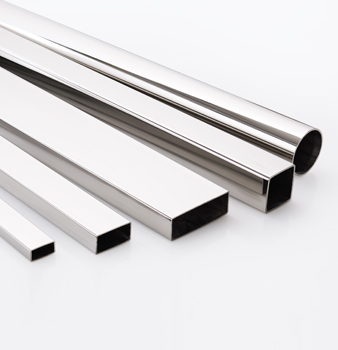
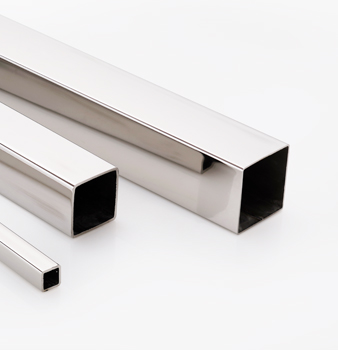
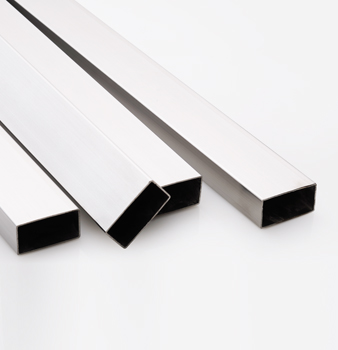
Grade 304 performs very well during fabrication. High ductility makes bending, shaping, and forming simple into different profiles such as round, square, or rectangular hollow structural tubes. In addition, 304 stainless steel offers excellent weldability. Most standard applications require no pre-heating or post-weld annealing.
Grade 410 presents greater difficulty in welding because of higher carbon content, together with hardening characteristics. The grade normally needs pre-heating to stop cracking while welding occurs. Post-weld heat treatment often becomes necessary to restore ductility.
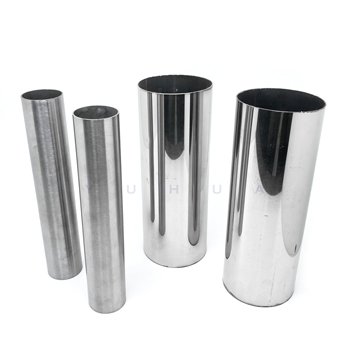
Project managers, together with engineers, must follow a precise corrosion-resistant pipe specification to protect structural integrity and satisfy international safety codes. Whether teams order hollow structural tubes for construction or decorative pipes for luxury interiors, knowledge of standard specs simplifies the procurement process.
At YUHUA, production setup matches rigorous global standards. Every pipe meets exact dimensional tolerances.
Understanding exactly when to use 410 stainless steel pipe instead of 304 helps companies reduce material costs while maintaining required structural performance. Selection of Grade 410 fits the following situations.

*Indoor and Dry Applications:Indoor furniture frames, office storage solutions, or modern wardrobe systems do not need extreme rust resistance. An oval wardrobe rail manufactured from Grade 410 or 430 delivers robust structural integrity and a refined surface finish at a significantly more competitive cost than Grade 304.
*High-Stress Mechanical Components:Pipe used as a structural component inside machinery that needs high tensile strength, wear resistance, and load-bearing capacity benefits from heat-treated 410. The material outperforms standard 304 in these cases.
*Cost-Sensitive Projects with Low Corrosive Exposure:410 stainless steel generally costs less. The grade lacks expensive nickel alloy present inside the 300 series. Mild environments combined with tight budgets make 410 a practical selection.
*Applications Requiring Magnetic Properties:Automated sorting or manufacturing environments that need magnetic handling find the magnetic nature of martensitic 410 a useful requirement.
YUHUA began operations in 2009 inside Nanhai District, Foshan City. We have developed into one of China’s leading stainless steel manufacturing facilities. Production centers on a full selection of stainless steel pipes. The range covers the 200, 300 (304, 304L, 316L), and 400 series (410, 430).
Selection of proper material includes many technical factors. We therefore operate our own factory line supported by a skilled team of engineers. This arrangement allows the creation of custom products matched exactly to specific needs. ISO 9001 and Sedex certifications, 10 national patents, and tight quality control procedures guarantee every delivered product satisfies expectations for durability, appearance, and precise specifications.
Projects may call for premium corrosion resistance of 304 on an architectural facade or high-strength economy of 410 on interior hardware. The team supplies reliable technical support together with dependable after-sales assistance in both situations. Consistent product quality, joined with fair pricing, positions us as the preferred partner for businesses around the world.
Contact our team today to review project requirements or to obtain a detailed material data sheet.
A: The primary difference appears in the metallurgical structure together with the chemical composition. Grade 304 contains 18 percent chromium plus 8 percent nickel. These levels produce high resistance to rust and leave the material non-magnetic. Grade 410 contains 11.5% to 13.5% chromium with negligible or nominal nickel content. The alloy becomes magnetic and reaches greater hardness levels but shows reduced resistance to rust in harsh environments.
A: Outdoor environments that include rain, humidity, or industrial pollutants favor 304 stainless steel pipe performance by a large margin. Nickel content builds a strong protective layer that blocks oxidation. Grade 410 pipe stays open to rust under steady outdoor moisture exposure. The material therefore receives recommendation mainly for dry or indoor environments.
A: International standards such as ASTM A554 address welded stainless steel mechanical tubing. At YUHUA, we supply detailed specification sheets. These sheets cover dimensions, thickness tolerances, and material grades adjusted specifically to project compliance needs.
 Address: Muyuan Industrial Zone, Shishan Town, Nanhai District, Foshan City, Guangdong Province
 Call us now:+86 13751499396
 Email:546980277@qq.com


Foshan Nanhai Yuhua Hardware Products Co., Ltd.佛山市南海誉华五金制品有限公司