

Selecting the proper stainless steel pipe for your particular application requires more than just knowing the commonly used stainless steel alloys. Buyers must translate the service conditions to which the pipe will be subjected into specifics regarding grade, form, construction, wall thickness, tolerances, surface finish, and even inspection methods. There can be considerable differences between, for example, a decorative tube, a chemical service line, and an item used to support precision equipment. All three may be made of stainless steel, but they can have completely different requirements.
Start by establishing the pipe’s operating conditions and its function. Define what the pipe is supposed to carry, support, resist, and fit before looking at prices to compare.
Determine the exposure to moisture, chlorides, chemicals, cleaning products, and weather. Since furniture tubing is used indoors, the corrosion resistance required is less than that for pipes used near seawater or in chemical plants.
Temperature, cleaning frequency, and contact with other metals of different properties also need to be taken into account when selecting an appropriate material. Materials used in hygienic or visible applications require good stain resistance and ease of cleaning.
A useful review covers three points:
1.Indoor, outdoor, marine, chemical, or hygienic service
2.Continuous or occasional exposure
3.Whether long-term appearance is important
When designing a fluid system, it is important to consider the maximum pressure, the method of joining the pipes, and the relevant piping standard. Frames and supports must be checked for bending, torsion, wall thickness, straightness, and connection detail. Also, the surface quality and weld appearance are critical in a decorative project.
All the processing steps, such as welding, bending, polishing, cutting, drilling, and forming, can affect the chosen grade and finish. Tubes for making custom fixtures or for automated assemblies require tight dimensional control.
Do not select material grade based on price alone. Instead, choose a grade best suited for your application’s exposure and your intended method of fabrication.
| Grade | Main consideration | Typical uses |
| 201 | Cost-effective in moderate environments | Furniture, decoration, general structures |
| 304/304L | Balanced corrosion resistance and fabricability | Handrails, food equipment, machinery |
| 316L | Better resistance to chlorides and chemicals | Marine, pharmaceutical, chemical systems |
| 410S/430 | Suitable for selected interior components | Wardrobe rails, storage, furniture |
Grade 201 is the preferred grade for indoor decorative products, furniture, machine covers, etc used in moderate environments. YUHUA welded/seamless/decorative 201 pipes are offered in round, square & rectangular shapes and finished to matte, polished, brushed, or any special finish required.
Grade 304 stainless is a more general corrosion-resistant weldable material that also has a pleasing appearance and is suitable for all manner of items, including furniture frames, stair handrails, food processing plant equipment, and industrial plants.
316L is used in situations where there will be exposure to chlorides, chemical exposure, or increased sanitary requirements. 316L has higher molybdenum for greater resistance to pitting and crevice corrosion, as well as low carbon to assure weldability.
316L stainless steel round tubes are used in marine equipment, in desalination plants, in chemical processing, in pharmaceuticals, and in food processing equipment. YUHUA 316L stainless steel round tubes are available in various sizes, thicknesses, and surface finishes.
Two other grades, 410S and 430, could be recommended for furniture, for storage, and for interior decorative objects when too much stiffness, adequate appearance, and fair cost are the main required characteristics. They are not suggested for harsh environments, where 304 and 316L are recommended instead.
YUHUA oval wardrobe rail pipes are made from 410S/430 stainless steel, polished as required, and used in wardrobes, hotel storage, retail shop displays, and custom furniture systems.
Section geometry and manufacturing method influence the distribution of load, joint details, esthetics, and cost. Sections must match assemblies.
| Form | Main advantage | Common application |
| Round | Uniform geometry for flow and fittings | Pipelines, handrails, exhaust parts |
| Square | Flat faces simplify framing | Furniture, guards, supports |
| Rectangular | Different width and height proportions | Frames, architectural details |
A round pipe is used for fluid transport and also for parts that need uniform geometry. Square tube makes for easy welded framing, while rectangular pipe can be used for wider faces or for lower profiles, for example.
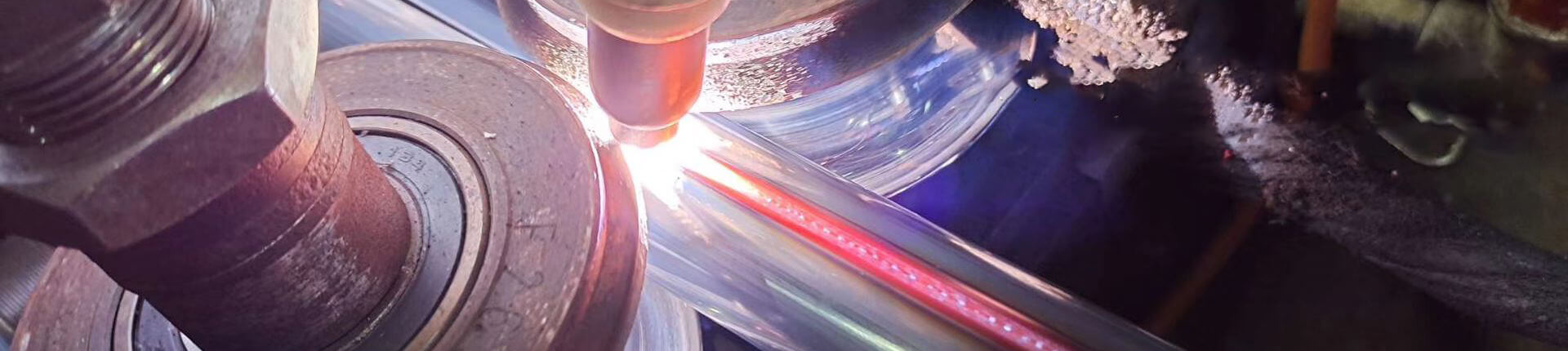
Welded pipe can be used for architectural, decorative, furniture, and structural applications. YUHUA’s Welded ASTM A554 Stainless Steel Pipe & Tube is available in 201, 304, 304L, 316, and 316L grades. Welded stainless steel pipe and tubes are available in round, square, and rectangular forms with mirror, hairline, brushed, and matte finishes. Seamless pipe is commonly used for pressure or temperature applications but does not automatically ensure suitability for service. The suitability for service of seamless pipe depends on its standard, its dimensions, its pressure rating, its testing, etc.
The outer dimensions of a part or tube determine how the part will fit in relation to other parts. The wall thickness of a part or tube determines stiffness, weight, bending resistance, and weldability. The length tolerance of a part affects how parts will go together and how much material will be wasted in cutting the part to size.
The specification should state the outer diameter and/or side dimensions, wall thickness, cut length, and tolerance. The YUHUA 20×20 mm 304 square tube, for example, has a specified tolerance of ±0.13 mm, a straightness of max 1.5 mm/m, and a maximum corner radius of 2.0 mm.

Finish and precision affect appearance, cleaning, fabrication, and assembly. These should be clearly stated in the RFQ.
While resistance to corrosion is a necessary condition for a classy stainless steel pipe that is intended to be visible and used as the structural component of furniture or a building, its appearance in use needs to be judged by a number of other criteria, including gloss, scratch resistance, weld visibility, edge quality, and batch consistency.
Different surface finishes have different looks. Items like wardrobe rails, display stands, handrails, and lighting can all benefit from a matching finish. Items such as machinery frames are best produced with a clean manufacturing finish. Also confirm whether protective packaging is required.
For a high-precision positioning ss pipe, it is required that the tube can be positioned to fixtures, guides, mounting holes, etc., and be assembled automatically. Important to check are the outer dimensions, wall thickness, straightness, corner radius, ovality, and cut-length tolerance.
Annealing, the heat treatment process, also supports later fabrications. Polishing can be used to make the stainless steel surface look better and make it easier to clean. Pickling is used to remove scale and other surface contaminations after a stainless steel has been thermally processed. The choice of a bright, dull, brushed, or mirror finish is determined by the intended use, not by how the finished surface looks in a sample image.
A complete RFQ removes differences between quotes from potential buyers.
1.Material grade and applicable standard
2.Shape and welded or seamless construction
3.Outer dimensions, wall thickness, and length
4.Required dimensional tolerances
5.Surface finish and visible-surface expectations
6.Cutting, welding, bending, or polishing needs
7.Inspection documents, packaging, quantity, and application
YUHUA selects products that meet international standards. We can provide Mill Test Certificates, Eddy Current inspection, and can also provide products with customized dimensions or surface finishes. It is always better to confirm your exact requirements before placing an order.
Your final decision in selecting a pipe would incorporate factors such as environment, grade, geometry, and process. Ideally, if all of these criteria were to be met, then the pipe would arrive on site fit for purpose to be fabricated as required.
A: List corrosion exposure, temperature, fabrication, and service life. Use 201 for moderate indoor service, 304 for average service, 316L for service where there is exposure to chlorides or chemicals, and 410S/430 for interior components.
A: Suitable for many outdoor applications if maintained and not exposed to high levels of chlorides. 316L is generally more suitable for coastal, marine, or chemical applications.
A: Description of Welded Pipe and Seamless Pipe. Welded pipe contains a longitudinal seam and is used in a variety of decorative as well as structural applications. Seamless pipe does not have a longitudinal seam and is usually specified for its ability to handle very high pressure or temperature. Both welded and seamless pipes are specified with certain standards in place and need to be tested for flaws.
A: A superficial inspection is undertaken to assess surface consistency, polish, scratch marks, welds, and overall batch appearance. This finish is generally used for items such as high-quality furniture, point-of-sale displays, handrails, lighting, architectural features, and other work that will be exposed.
A: Check for the following dimensions/tolerances: outer diameter or side length, wall thickness, straightness, ovality, corner radius, cut length. Values accepted from the design of the assembly and the relevant product standard.
 Address: Muyuan Industrial Zone, Shishan Town, Nanhai District, Foshan City, Guangdong Province
 Call us now:+86 13751499396
 Email:546980277@qq.com


Foshan Nanhai Yuhua Hardware Products Co., Ltd.佛山市南海誉华五金制品有限公司