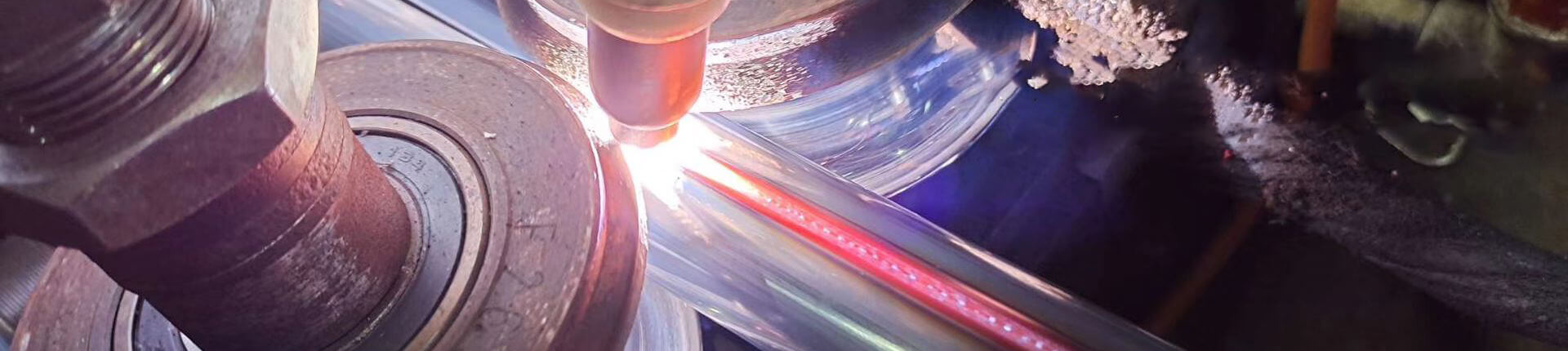


316 stainless steel tubing price quotes are not based solely on the grade. Quotations can also vary based on how the tubing is made, the dimensions, finish, testing, quantity, packaging, and delivery terms. Buyers should therefore ask not only “What is the price?” but also “What specification and service scope are included?”
This guide explains how to evaluate and compare offers and prepare a complete request for quotation.
316 stainless steel holds chromium along with nickel and molybdenum. Alloying elements shape the raw material base. Finished tube price covers forming, welding or piercing, heat treatment, sizing, finishing, testing, cutting, packing, and logistics.
A valid quotation needs a date, currency, Incoterm, destination, and technical specification. Coil or billet prices cannot represent finished tube cost because they exclude conversion and order-specific work.
Buyers should distinguish 316 from 316L. 316L data lists molybdenum at 2.0–3.0% and carbon at no more than 0.03%, supporting corrosion resistance and weldability.
Price per kilogram suits weight-based comparison. Price per meter or foot supports installation planning, while price per piece is common for fixed or custom lengths.
Before comparing offers:
1.Confirm the weight per meter or foot.
2.Multiply it by the ordered length.
3.Add finishing, testing, packing, and freight.
4.Check whether the weight is net product weight or gross shipping weight.
A heavier wall can make a low kilogram price expensive per meter. A low piece price may hide a shorter length.
316 and 316L deliver similar corrosion resistance advantages. 316L contains less carbon. Welded fabrication often selects 316L. Reduced carbon content lowers carbide precipitation near welds.
YUHUA lists 316L round pipe for marine, chemical, pharmaceutical, oil and gas, food and beverage, and architectural applications. Price differences depend on availability, product form, volume, and alloy market conditions. Project standards, together with service environments, guide selection.
Seamless tube has no longitudinal weld and normally requires more complex processing. It is often specified for critical pressure or temperature service. Welded tube is formed from strip or plate and can be more economical for approved structural, decorative, and general industrial uses.
| Item | Seamless tube | Welded tube |
| Typical cost | Usually higher | Usually lower |
| Main advantage | No longitudinal weld | Efficient production |
| Selection basis | Critical or pressure service | General approved service |
| Buyer check | Pressure and test requirements | Weld quality and inspection |
YUHUA’s applicable ASTM A554 welded tube includes 316 and 316L grades, as well as round, square, and rectangular profiles.
Outside diameter and wall thickness determine tube weight and material cost. Length affects cutting yield, packing, container loading, and fabrication. Non-standard sizes may require additional setup or a higher minimum quantity.
Tight tolerances add cost through greater process control and inspection. Drawings should specify only the limits needed for assembly and performance.
Mill, annealed, pickled, brushed, polished, and mirror finishes involve different processing. Decorative tube may require several polishing stages, while industrial tube may prioritize cleanliness or dimensional control.
Depending on the standard, testing may include dimensional inspection, eddy-current or hydrostatic testing, chemical verification, mechanical testing, and mill certificates. YUHUA provides mirror, brushed, and matte finishes for applicable welded tubes, plus traceability and mill test certificate options.
State the required standard clearly. ASTM A554, ASTM A269, ASTM A312, EN, and JIS requirements serve different purposes and are not interchangeable.
Larger orders spread setup, testing, and handling costs across more units. Small mixed-size orders, custom lengths, and urgent production often carry a higher unit cost.
Packaging also changes the quote. Export shipments may require waterproof wrapping, steel strapping, end protection, or seaworthy packing. We provide waterproof paper and steel-strip packing for tube products.
Compare freight, insurance, port costs, duties, and inland delivery under the same Incoterm. EXW and CIF do not include the same services.

Create a comparison sheet covering grade, method, dimensions, length, quantity, unit weight, finish, standard, testing, and Incoterm.
Use this process:
1.Remove offers that do not match the required grade or standard.
2.Convert prices to the same currency and unit.
3.Recalculate total product weight.
4.Separate base material from optional processing.
5.Compare lead time and quotation validity.
This prevents a lighter wall, shorter piece, or lower inspection level from appearing cheaper than an equivalent product.
Confirm whether the price includes cutting, polishing, annealing, passivation, inspection, certificates, third-party testing, export packing, tooling, and documentation. Also check delivery tolerances.
A clear quotation should identify exclusions. Otherwise, charges may appear later or the material may need extra processing.
Total landed cost includes product, processing, packing, freight, insurance, customs, inland transport, inspection, and possible rework.
Illustrative case study: A fabricator compares two welded 316L tube offers. Supplier A quotes less but excludes polishing, protective packing, and mill certificates. Supplier B includes the required finish, documents, and export packing. After local processing and repacking are added, Supplier B has the lower project cost.
The best-value tube is the least costly option that reliably meets the design conditions.
| Application condition | Practical selection approach |
| Dry indoor decorative use | Consider 304 welded tube if permitted |
| Coastal or chloride exposure | Consider 316 or 316L |
| Chemical processing | Verify chemical compatibility |
| High-pressure critical service | Use seamless tube when required |
| General structural fabrication | Use welded tube where approved |
| Extensive welding | Evaluate 316L and post-weld cleaning |
316L highlights resistance to pitting, crevice corrosion, chlorides, acids, and alkaline solutions. Its value comes from application fit, not simply from costing more than 304.
At YUHUA, we can quote more accurately when the RFQ includes:
1.Grade
2.Product type: seamless or welded
3.Shape: round, square, or rectangular
4.Outside diameter and wall thickness
5.Length and quantity
6.Surface finish and heat-treatment condition
7.Applicable standard
8.Testing and certificate requirements
9.Packing requirements
10.Destination, requested date, and Incoterm
We offer applicable tube options in different sizes, thicknesses, profiles, and finishes according to the confirmed specification. Complete information helps us calculate material yield, processing, packing, and logistics accurately.
A: There is no universal rate. The quote changes with alloy-market conditions, dimensions, manufacturing method, finish, testing, quantity, currency, and delivery term. Request a dated, specification-based price.
Price per foot hinges largely upon weight per foot. Outside diameter and wall thickness fix the weight per foot. Cutting, finishing, testing, packing, and freight can stay included or face separate charges.
A: List grade, process, shape, OD, wall, length, finish, standards, test, etc and quantity, shipping destination, delivery term and time, and how to pack. So we can give out quotations more clearly and objectively.
 Address: Muyuan Industrial Zone, Shishan Town, Nanhai District, Foshan City, Guangdong Province
 Call us now:+86 13751499396
 Email:546980277@qq.com


Foshan Nanhai Yuhua Hardware Products Co., Ltd.佛山市南海誉华五金制品有限公司