

A554 stainless square tube is used for the manufacture of furniture, equipment framing, stairway handrails, and decorative items. A554 square tube has a clean profile, is durable, and resists corrosion. All orders for stainless square tube should be specified correctly and include grade, size, tolerance, weld condition, and surface finish.
ASTM A554 is a specification for welded stainless steel mechanical tubing. This can be round, square, rectangular, or other shapes.
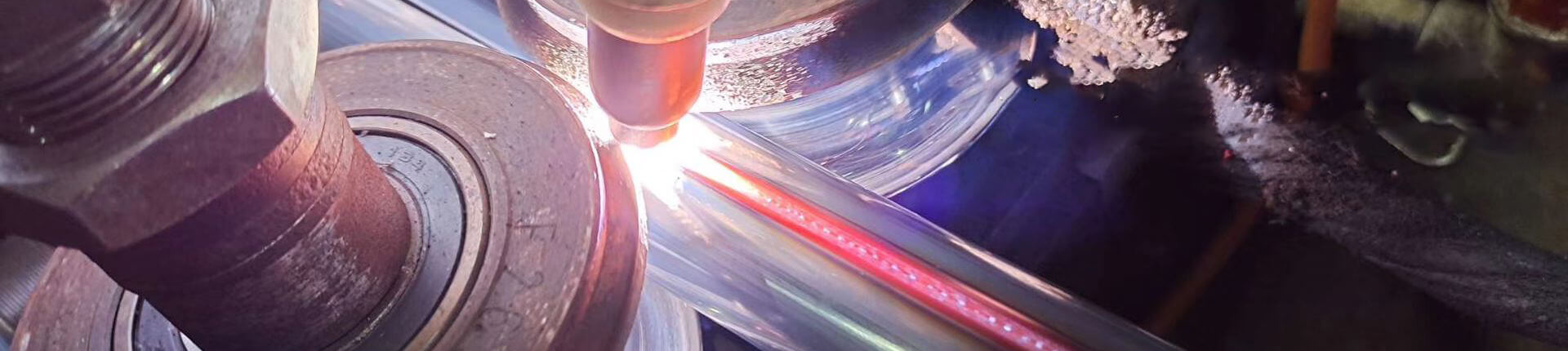
For square tubing, stainless strip is formed and welded along the seam. Production may then include sizing, annealing, straightening, polishing, cutting, and inspection. The end product will be completed to the customer’s requirements, so ASTM A554 in itself is not a complete specification.
Grade selection needs to follow the environment, fabrication method, appearance target, and budget.
Grade 201 can suit decorative fabrication in moderate environments when cost control remains important. Grades 304 and 304L appear quite common in furniture, handrails, equipment frames, and architectural projects. These specific grades offer a solid mix of corrosion resistance, formability, and weldability. Grades 316 and 316L work well in areas with chloride exposure, marine settings, or chemical surroundings. Experts often consider the low-carbon versions such as 304L and 316L when a project involves a lot of welding. Ferritic 430 can fit certain indoor decorative applications under controlled conditions.
A square tube must fit both the design and fabrication process. Buyers should define several details.
1.Outside dimensions across the flats
2.Nominal wall thickness
3.Cut length and length tolerance
4.Straightness and twist limits
5.Corner radius
6.Concavity or convexity limits
7.Tolerance after finishing
These details affect fit, frame alignment, and visual consistency.
The weld seam can affect forming, polishing, and final appearance. Buyers should state whether the tube will undergo bending, further welding, polishing, or exposure in the completed assembly. Sample approval can reduce production risk.
Inspection may include dimensional measurement, surface checks, weld-integrity testing, material verification, and mill test certificates. Third-party inspection should receive agreement before production.
YUHUA produces stainless steel tube that includes eddy current testing for weld integrity and available mill test certificates.
Surface finish affects appearance and downstream work.
| Finish | Typical benefit | Main consideration |
| Mill or annealed | Suitable for further fabrication | May need final polishing |
| Brushed or satin | Consistent directional appearance | Grain direction must match |
| Polished | Smooth decorative surface | Protective handling is important |
| Mirror | Highly reflective premium look | Small defects are more visible |
For architectural and furniture projects, buyers should specify the finish reference, polishing direction, acceptable surface defects, and protective film.
High-precision positioning stainless tube proves useful when parts must align repeatedly in jigs, modular frames, equipment, or prefabricated systems. Controlled dimensions and straightness can reduce shimming, rework, uneven gaps, and fixture adjustment.
Consider a fabricator producing repeatable display frames from 20 × 20 mm tubing. By defining the wall, straightness, corner radius, and cut-length tolerance, the team can design one stable fixture instead of correcting every frame after welding. The outcome becomes a more predictable process.
Precision should create measurable value. Unnecessarily tight tolerances may add cost without improving the assembly.

Square mechanical tubing works especially well for railing posts, frames, canopies, screens, facade details, and decorative supports.
For indoor installations, finish consistency and clean joints often become the priorities. Outdoor projects also require attention to grade, drainage, maintenance, and exposure to salt or industrial pollutants. A polished 304 tube may suit many general environments. Grade 316L may prove more suitable near coastal or chloride-rich locations.
A controlled corner radius improves visual repetition and helps plates, brackets, and end caps fit consistently.
Square stainless tubing finds use in table and chair frames, shelving, retail displays, lighting structures, machinery guards, conveyor frames, enclosures, and decorative assemblies. Also, furniture frames, handrails, structural supports, machinery guards, conveyor systems, art installations, and display structures as relevant uses.
For furniture, clean welds and appearance may lead the specification. Equipment projects may prioritize repeatable dimensions, straightness, and fabrication efficiency.
A complete RFQ should include several items.
1.Standard and stainless steel grade
2.Square outside dimensions
3.Wall thickness
4.Length and cut tolerance
5.Quantity
6.Surface finish and polishing direction
7.Straightness and corner requirements
8.Weld condition and planned fabrication
9.Inspection and certificate requirements
10.Packaging, destination, and delivery schedule
Drawings prove valuable for mating parts, visible joints, precision positioning, and special end preparation. Buyers should separate mandatory requirements from preferences. This separation allows evaluation of manufacturability and helps avoid unnecessary processing.
At YUHUA, the review covers the application as well as the nominal size. Product information covers multiple stainless grades, profile shapes, surface conditions, custom lengths, and inspection options. We also provide waterproof paper and steel-strip export packing for transport protection.
Send a drawing or specification sheet with the intended use. The next step involves discussion of dimensions, finish, tolerances, testing, documentation, and packaging as one coordinated requirement. This approach proves more reliable than selecting tubing by size alone.
A: The material finds common use for architectural details, handrails, furniture frames, equipment guards, display systems, and decorative structures where corrosion resistance and appearance hold importance.
A: Buyers should define outside dimensions, wall thickness, length, straightness, twist, corner radius, and limits for concavity or convexity. Tighter requirements should receive confirmation before production.
A: Options exist for tubing with custom lengths, multiple surface conditions, and project-specific dimensional requirements. Please send the grade, size, wall thickness, tolerance, finish, quantity, inspection needs, and drawing so we can complete an accurate review.
 Address: Muyuan Industrial Zone, Shishan Town, Nanhai District, Foshan City, Guangdong Province
 Call us now:+86 13751499396
 Email:546980277@qq.com


Foshan Nanhai Yuhua Hardware Products Co., Ltd.佛山市南海誉华五金制品有限公司