

Selecting stainless steel pipe becomes confusing when a specification mixes inch sizes, metric designations, outside diameter, wall thickness, and Schedule. A “4-inch pipe,” for example, is not a tube with a 4-inch OD.
This guide connects NPS, DN, OD, ID, Schedule, wall thickness, and theoretical weight so engineers, fabricators, contractors, and buyers can confirm dimensions before requesting a quotation.

NPS stands for Nominal Pipe Size. It relies on inch-based numbers. On the other hand, DN stands for nominal diameter. It relies on metric labels. Both terms help identify matching pipe and fitting sizes. However, neither term represents an exact, measured diameter.
| NPS | DN |
| 1 | 25 |
| 2 | 50 |
| 3 | 80 |
| 4 | 100 |
| 6 | 150 |
When you compare NPS vs DN, treat the designation simply as a basic size reference. After that, you should always check the actual OD and the required wall thickness.
OD refers to the measured distance across the outside of the pipe. For any specific NPS, this outside measurement usually stays the same across different Schedules. Meanwhile, a thicker wall grows inward. As a result, it makes the internal bore smaller.
ID = OD − 2 × wall thickness
Suppose you have an OD of 114.30 mm combined with a 3.05 mm wall. This setup creates an ID of roughly 108.20 mm. If that wall thickness grows to 6.02 mm, the ID shrinks down to about 102.26 mm. Naturally, this shift impacts the total flow area. It also influences your fitting choices and the overall weight.
Schedule serves as a standard series for wall thickness. It is never a direct measurement. For example, SCH 10S does not mean you get a 10 mm wall. Likewise, SCH 40S does not equal a 40 mm wall. You must find the true thickness by pairing the Schedule with the correct NPS.
The letter “S” marks specific Schedule designations. People commonly use these for stainless piping. Typical series include 5S, 10S, 40S, and 80S. A larger number normally points to a thicker wall for that same nominal size. Still, you should remember that Schedule by itself does not act as a pressure rating.
This short chart highlights the most common sizes. The listed weight is purely theoretical. We calculate it using a standard density of 7.93 g/cm³. Your actual values might differ slightly. This depends on the specific steel grade and normal manufacturing tolerances.
| NPS | DN | OD mm | 10S wall mm | 10S ID mm | 10S kg/m | 40S wall mm | 40S ID mm | 40S kg/m |
| 1/2 | 15 | 21.34 | 2.11 | 17.12 | 1.01 | 2.77 | 15.80 | 1.28 |
| 3/4 | 20 | 26.67 | 2.11 | 22.45 | 1.29 | 2.87 | 20.93 | 1.70 |
| 1 | 25 | 33.40 | 2.77 | 27.86 | 2.11 | 3.38 | 26.64 | 2.53 |
| 1 1/2 | 40 | 48.26 | 2.77 | 42.72 | 3.14 | 3.68 | 40.90 | 4.09 |
| 2 | 50 | 60.33 | 2.77 | 54.79 | 3.97 | 3.91 | 52.51 | 5.50 |
| 3 | 80 | 88.90 | 3.05 | 82.80 | 6.52 | 5.49 | 77.92 | 11.41 |
| 4 | 100 | 114.30 | 3.05 | 108.20 | 8.45 | 6.02 | 102.26 | 16.24 |
| 6 | 150 | 168.28 | 3.40 | 161.48 | 13.97 | 7.11 | 154.06 | 28.55 |
Please confirm the governing dimensional and material standards before you place an order. You should also verify any required tolerances, testing rules, or special end preparations.
First, you can figure out the ID. Just take the OD and subtract twice the wall thickness. Next, you might want to find the theoretical metric weight. A handy formula exists for stainless steel with a density near 7.93 g/cm³. It looks like this:
Weight in kg/m ≈ 0.02491 × wall thickness × (OD − wall thickness)
Make sure to use millimeters for both the OD and the wall thickness. The final result helps you estimate shipping costs. It also assists with planning structural supports and material usage. However, this math should never replace certified production data. You must still rely on actual weighing when strict tolerances matter.
SCH 10S stainless steel pipe features a fairly thin wall. Because of this, it offers a larger internal passage compared to SCH 40S in the same NPS. Its lighter mass brings several benefits. It can easily simplify transport, cutting, welding, and daily installation tasks.
This option often fits well for basic process lines and fluid transfer systems. It also works for fabricated assemblies as long as the design code allows it. Of course, your final choice still depends on a few key factors. These include operating pressure, temperature, corrosion allowance, joining methods, and mechanical loading.
In contrast, SCH 40S delivers a thicker wall. This creates a smaller ID and adds extra weight. Engineers often evaluate this option for demanding projects. For the same material grade and design conditions, the increased wall thickness may provide greater pressure capacity, stiffness, and resistance to mechanical loading. However, it does not increase the intrinsic yield strength or tensile strength of the stainless steel. It is also useful if you need extra corrosion allowance or direct compatibility with standard SCH 40 fittings.
The material grade matters just as much. Industry professionals widely use Grade 304 for general corrosion resistance and standard fabrication. On the other hand, Grade 316 and 316L generally provide better resistance to pitting and crevice corrosion than 304 and 304L in certain chloride-containing environments. However, 316L is not universally suitable for high-chloride service. Material selection must consider chloride concentration, temperature, pH, crevice conditions, and stress-corrosion-cracking risk. Ultimately, the Schedule alone will never dictate the total corrosion performance.
| Selection factor | SCH 10S | SCH 40S |
| OD at the same NPS | Same | Same |
| Wall thickness | Thinner | Thicker |
| Internal diameter | Larger | Smaller |
| Weight per length | Lower | Higher |
| Installation load | Lower | Higher |
| Final selection | Based on design conditions | Based on design conditions |
The smartest choice requires a careful balance. You must weigh flow capacity against structural demands. You should also consider fabrication steps, the service environment, and total installed costs. You should avoid simply picking the thicker option without thinking.
A standard 4-inch stainless steel pipe carries the NPS 4 designation. In metric terms, this commonly matches up with DN100. Its actual measured OD sits at 4.500 inches. In millimeters, that equals exactly 114.30 mm.
Let us look at a practical process-line example to see how this works:
1.SCH 10S features a 3.05 mm wall. This leaves an ID of about 108.20 mm. The theoretical weight hovers near 8.45 kg/m.
2.SCH 40S provides a much thicker 6.02 mm wall. Its ID drops to roughly 102.26 mm. The theoretical weight jumps to around 16.24 kg/m.
3.Both versions share the exact same standardized OD. However, they deliver very different flow areas. They also create different support loads for the building structure.
This quick example highlights a major point. Asking for “4 inch stainless steel pipe dimensions” remains incomplete. You must always include a specific Schedule or an exact wall requirement.
You should follow a very structured process:
1.Confirm all relevant piping and material standards.
2.Identify the exact design pressure and the operating temperature.
3.Review the flowing medium carefully. Look closely at potential chloride exposure and the needed corrosion allowance.
4.Calculate the required flow area. Do not forget to figure out the expected pressure loss.
5.Check the compatibility for fittings and flanges. Also verify your welding plans and structural supports.
6.Confirm whether you need seamless or welded construction.
7.Verify the steel grade and wall tolerance. Make sure to list all inspection and certification rules.
A size chart certainly helps with basic dimensional selection. Even so, your final approval must always follow the strict project code. It must also match the real-world service conditions.
A solid Request for Quotation (RFQ) needs many details. It should clearly state the steel grade, NPS, or OD. You should add the DN when it applies. Include the Schedule or the exact wall thickness. Mention the required length and total quantity. Furthermore, list the construction method, surface finish, and end type. Finally, specify the standard, tolerance limits, testing rules, certification needs, packaging style, and final shipping destination.

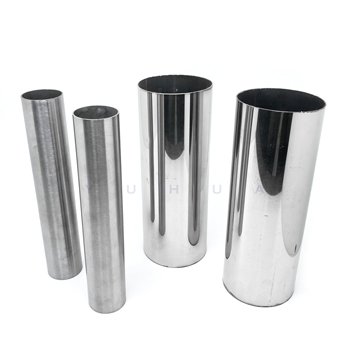
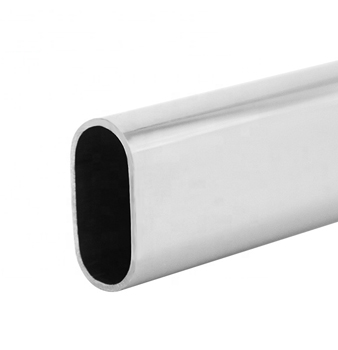
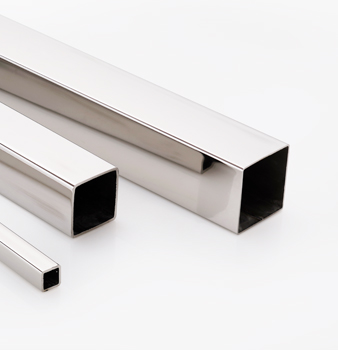
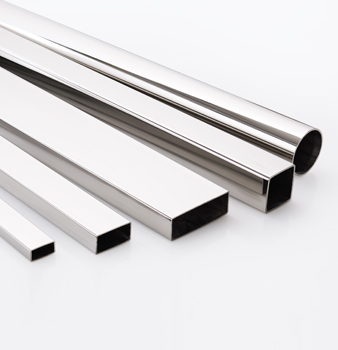
At YUHUA, we work closely with many popular grades. These include 201, 304, 304L, 316, and 316L. We offer round, square, and rectangular pipes. We also provide multiple surface finishes. In addition, we supply both welded and seamless options. You can easily request polished, annealed, or standard mill finishes for applicable products.
Feel free to send us your technical drawing and size list. Include the material standard, Schedule, length, and total quantity. We can thoroughly review your specification before we send a quotation. This careful step helps reduce mismatched dimensions. It also prevents common confusion between nominal pipe size and actual tube OD.
A: NPS acts as an inch-based nominal designation. Meanwhile, DN serves as its direct metric counterpart. Both labels help identify compatible piping systems. However, they do not directly state the actual OD or ID.
A: Both versions share an identical OD of 114.30 mm. However, SCH 10S uses a 3.05 mm wall. In contrast, SCH 40S relies on a thicker 6.02 mm wall. This difference naturally produces different internal IDs and total weights.
A: SCH 40S is noticeably thicker and heavier at the exact same NPS. On the flip side, SCH 10S provides a much larger internal bore. Your final selection should always follow the system pressure and operating temperature. You must also account for local corrosion conditions and the applicable engineering code.
 Address: Muyuan Industrial Zone, Shishan Town, Nanhai District, Foshan City, Guangdong Province
 Call us now:+86 13751499396
 Email:546980277@qq.com


Foshan Nanhai Yuhua Hardware Products Co., Ltd.佛山市南海誉华五金制品有限公司