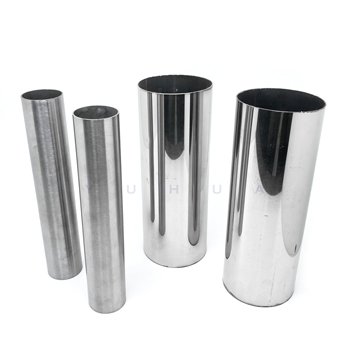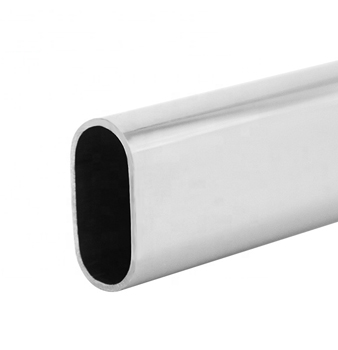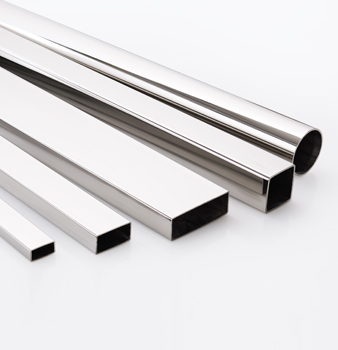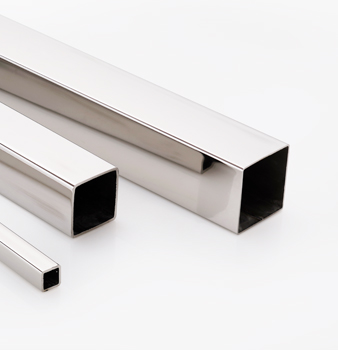


Selecting stainless steel round tube involves more than diameter and grade. In machinery, furniture, handrails, fluid equipment, and fabricated assemblies, performance also depends on wall thickness, straightness, ovality, finish, and production method.
This guide shows how to specify tubing. Specification covers accurate fit, efficient fabrication, and stable batch quality. It also covers what belongs in an RFQ.

Round tubing provides a closed circular profile with efficient resistance to bending and torsion. It is used where corrosion resistance, weldability, appearance, or strength-to-weight performance matters.
Precision is not limited to diameter tolerance. A functional specification may also control wall variation, roundness, straightness, cut length, end squareness, and surface condition, depending on how the tube will be fitted or fabricated.
A request for “25 mm stainless pipe” may not show whether 25 mm is the OD, ID, or nominal size. State exact dimensions, units, grade, standard, and end use to avoid assembly errors.
In high precision positioning stainless pipe applications, small variations accumulate. Ovality can cause uneven clamping, poor straightness can shift an axis, and wall variation can affect bending or welding.
Five controls deserve attention:
1.OD for clamps, fittings, and mating parts
2.ID for shafts, inserts, or flow clearance
3.Straightness for alignment
4.Ovality for uniform contact
5.Cut length and end condition for fixture location
A precision stainless steel round tube should therefore be evaluated as a complete dimensional system, not by OD tolerance alone.
A practical specification begins with service conditions, then defines geometry, process route, finish, and inspection.
| Grade | Typical selection logic | Main point to verify |
| 201 | Cost-sensitive indoor or decorative use | Moisture and chemical exposure |
| 304/304L | General fabrication, architecture, food equipment, and machinery | Standard and cleaning conditions |
| 316/316L | Marine, chloride, chemical, or corrosive service | Medium and operating temperature |
| 410/430 | Selected furniture, decorative, wear-related, or magnetic uses | Corrosion and forming requirements |
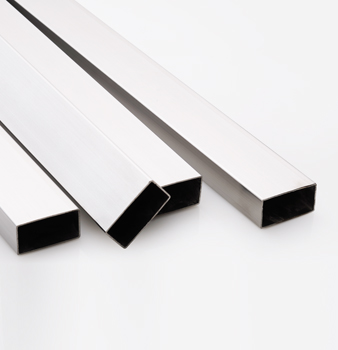
YUHUA’s listed welded tube range includes 201, 304, 304L, 316, and 316L grades, with round, square, and rectangular profiles. The final grade should be confirmed against the project environment and applicable standard, not price alone.

A drawing or purchase specification should include:
1.Exact OD, wall thickness, and functional ID
2.Fixed or random length
3.OD, wall, length, straightness, and ovality tolerances
4.End condition, such as deburred or square-cut
5.Surface finish and protected areas
6.Quantity and inspection requirements
Specification case study: A listed 4-inch 304 configuration demonstrates the value of separate controls. It has a 0.6 mm wall thickness, 1.8 m length, OD tolerance of ±0.2 mm, thickness tolerance of ±0.03 mm, and length tolerance of ±5 mm. This is more measurable than simply requesting “high precision.”
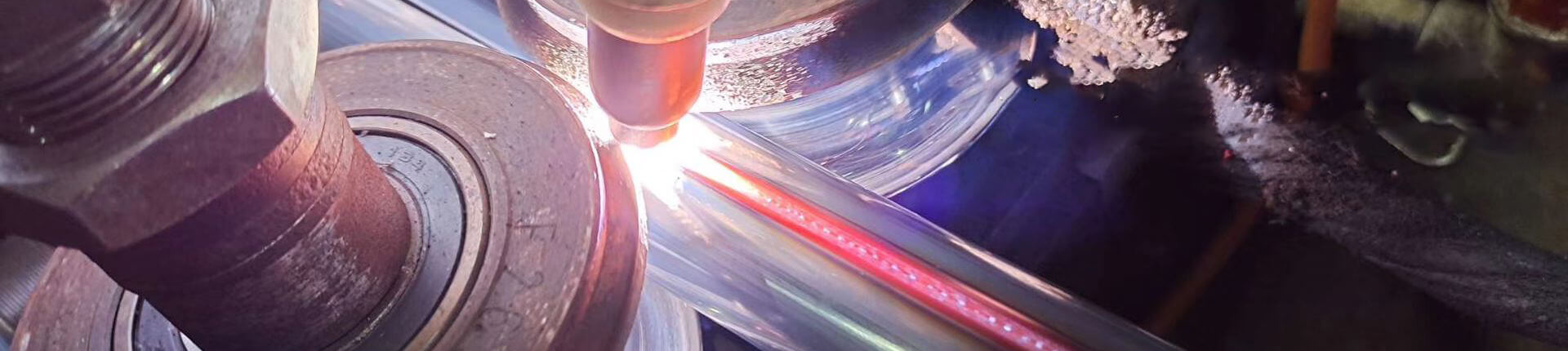
Welded tubing is formed from strip and joined longitudinally. It is often efficient for architecture, furniture, equipment frames, and general fabrication where finish choice and repeatable sizing matter.
Seamless tubing has no longitudinal weld and may suit certain pressure, temperature, or weld-restricted services. It does not automatically provide tighter tolerances; sizing, straightening, heat treatment, and inspection still influence accuracy.
Choose by application:
*Consider welded tube for standard structural, decorative, and fabricated uses.
*Evaluate seamless tube when a service standard or operating risk requires it.
*Request acceptance criteria and test methods for either route.
The application determines which feature needs the closest control. Automation and furniture projects may require different grades, tolerances, and finishes.
Equipment frames, guides, guards, sleeves, supports, and instrument structures often need consistent straightness and repeatable fit. They may also require drilling, bending, or welding.
State whether a part is static, rotating, clamped, or inserted so the supplier can prioritize OD, ID, ovality, or surface condition.
Visible products such as handrails, balustrades, furniture frames, wardrobe rails, and display structures depend on uniform appearance and careful handling.
Finish options may include mirror, brushed, matte, bright, polished, pickled, or annealed conditions, depending on the specification. YUHUA lists mirror, brushed, and matte finishes for ASTM A554 welded tubes. Buyers should also define acceptable weld visibility, and whether later bending or polishing will alter the surface.
For process equipment, confirm the standard, medium, pressure, temperature, weld quality, internal cleanliness, and documentation.
316L is commonly considered for chloride or chemical exposure, while 304 serves many general food-processing and industrial fabrication uses.
YUHUA’s 316L round pipe applications include marine, chemical, pharmaceutical, food, and architectural projects. Final suitability must be checked against the actual service conditions and regulations.
Price differences reflect alloy, tolerance, finish, testing, customization, packaging, and secondary operations.
Mill or annealed surfaces may suit hidden or further-processed parts. Brushed and polished finishes serve visible applications, while mirror surfaces need stricter scratch protection.
Forming quality affects downstream work. Uneven weld beads, local flattening, inconsistent hardness, or excessive springback can complicate bending and joining. Buyers should describe the final fabrication process, not only the delivered appearance.
Relevant controls may include dimensional inspection, surface review, material identification, weld testing, and traceable documents. YUHUA provides eddy-current testing for weld integrity, availability of hydrostatic testing, full material traceability, and mill test certificates for ASTM A554 welded tubes.
For repeat orders, first-article approval and batch identification establish a shared reference for dimensions, finish, and packaging before volume production.

At YUHUA, we recommend starting with the application. Tell us what the tube must fit, which processes follow delivery, and which characteristics are critical. We can then review grade, dimensions, manufacturing route, finish, inspection, and packaging together.
Include:
1.Grade and required standard
2.OD, wall thickness, functional ID, and length
3.Tolerances for critical dimensions
4.Welded or seamless preference
5.Finish and visual requirements
6.Quantity, destination, and packing needs
7.End use and later fabrication
8.Tests, certificates, or sample approval
Send YUHUA a drawing or dimensional schedule whenever possible. It helps us distinguish ordinary tubing from tight tolerance stainless steel tubing and reduces clarification time.
A: Round tube is generally specified by actual OD and wall thickness, while pipe is commonly ordered by nominal pipe size and schedule. Confirm the actual dimensions because commercial terminology may vary.
A: Neither is universally better. Grade 304 suits many general fabrication and architectural uses. Grade 316 or 316L is often selected for chloride, marine, or more aggressive chemical exposure.
A: Specify the dimensions controlling function, usually OD, ID, wall thickness, ovality, straightness, cut length, and end squareness. The mating part and assembly method should determine the values.
A: Precision depends on the entire manufacturing and inspection process. Welded tube can provide consistent sizing, while seamless tube may be necessary for certain service standards. Compare tolerances, tests, and end use rather than the seam alone.
A: Provide grade, standard, OD, wall thickness, length, tolerances, finish, quantity, application, testing, documentation, and destination. A drawing or sample is helpful when fit and appearance are critical.
 Address: Muyuan Industrial Zone, Shishan Town, Nanhai District, Foshan City, Guangdong Province
 Call us now:+86 13751499396
 Email:546980277@qq.com


Foshan Nanhai Yuhua Hardware Products Co., Ltd.佛山市南海誉华五金制品有限公司