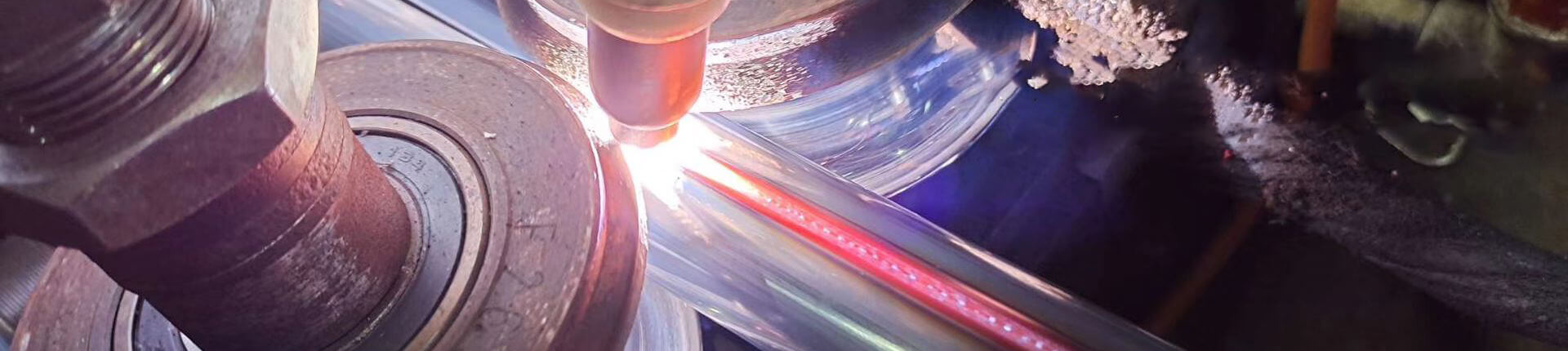


A classy stainless steel pipe is more than a special alloy grade. In architectural work, “classy stainless steel pipes” refers to the decorative tubes that are completed with a controlled surface finish, with exact dimensions, with perfect welds, and with special profiles. This result is not only due to the “shine” of the finish but also to the grade, the grain direction, the wall thickness, the fabrication, the packaging, and the maintenance conditions during the installation.
Key for architects, fabricators, furniture manufacturers, and buyers of a project is whether the approved appearance is maintained throughout production in large quantities and installation.
First, ensuring a consistent finish is key to a premium-looking product. Whether it is highly polished mirror finish tubing or brushed / satin finish tubing, uneven surface polishing, scratches, dents, and surface waviness are highly visible on the highly reflective surface. Additionally, on brushed / satin finish tubing, inconsistent brush finish, such as irregular brush stroke direction, very dark-appearing weld zones against the rest of the finish, scratches running in the wrong direction, and uneven finish tone between parts can also be very visible.
Buyers need to evaluate four key points when they are evaluating whether to accept a surface or not.
*Finish uniformity around the full profile
*Consistent grain direction
*Acceptable weld-line appearance
*Matching reflectivity and tone between adjacent pieces

YUHUA stainless steel round pipes can create soft, rounded lines ideal for use as handrails, balustrades, wardrobe rails, and as features that curve. Square tubing creates strong, structured lines ideal for use in the construction of a piece of furniture, partition, or display rack. Our Rectangular tubing is ideal when you require a wider visible tube face or a slimmer side profile.
The size of the railing must correlate to the scale of the space. For example, a narrow tube section such as those used in the fabrication of refined furniture would be lost in a large lobby railing application, whereas a heavy profile would surely make a statement but would also likely be overpowering in a small room.
Mirror-finished stainless steel is typically used for high-end luxury retail environments, 5-star hotels, elevators, showcase cases, art and design display frames, and all other types of decorative installations. This type of finish provides reflective surfaces and creates a perception of greater space and more light. However, it highlights any marks, surface irregularities, and polishing anomalies far more than a lower gloss finish.
Approval of a physical sample by the buyer under the same lighting as for the installation, and the identification of the faces visible after production processing such as welding, bending, or grinding.
In a brush, satin finish is a very practical finish for use on handrails, hotel rooms, shop fittings, office partitions, and also items of furniture that are frequently handled. The linear texture of a brushed and satin finish helps to reduce reflection, and minor scratches are less visible than on a matt finish.
It would be good to clarify the grain direction for square and rectangular sections. When vertical posts and horizontal rails are connected, it can look very poor if the grain direction is not consistent, even if the fit has been accurate. The same should apply to the cleaning of the joints.
Incorporating matte surfaces into your interior and home design will be perfect for a minimalist-style space and home that contains modern furnishings. Partitions and decorative features will also benefit from the use of matte finishes, particularly where a surface with low reflection is necessary. Even in interior spaces that contain lots of lighting, a matte finish can help to reduce glare to prevent distraction.
The term ‘matte’ may not be sufficient for custom production, and a sample, finish code, polishing requirement, or agreed visual may be required. YUHUA lists the following finishes for their range of stainless steel pipes: matte, polished, brushed, and customized.
A surface finish is of no use if the grade of stainless steel selected is not suitable for the application in hand. Grade 201 is typically used for either decorative or structural applications where the steel will be subjected to moderate exposure to corrosion. The steel can be supplied welded or in a seamless condition and can also be supplied as decorative. Pipe is available in round, square, and rectangular sections.
Grade 304 is widely used for architectural, furniture, handrail, and decorative projects because it combines corrosion resistance, weldability, formability, and polishability.
Grade 316L is more suitable for coastal, marine, chemical, or chloride-exposed situations. The higher molybdenum content improves pitting and crevice corrosion resistance. The lower carbon content also makes it suitable for welded situations. For salt-exposed architecture, choosing the right alloy is generally more important than choosing a high-gloss finish.
| Round | Handrails, balustrades, curved features | Soft, continuous lines |
| Square | Furniture, partitions, displays | Clean, geometric appearance |
| Rectangular | Frames, trims, directional structures | Wide face with slim depth |
| Oval | Wardrobes and garment displays | Refined and practical profile |
YUHUA’s oval wardrobe rail pipe in 410S or 430 stainless steel is intended for wardrobes, hotel storage, retail clothing displays, and custom furniture. It is available in customizable lengths with a smooth, polished surface.
A complete specification should include more than “polished” or “brushed.” State the target appearance, grain direction, visible faces, and whether an approved sample controls production. For reflective projects, define acceptable variation between pieces.
A Request for Quotation should include the profile, outside dimensions, wall thickness, length, grade, standard, tolerance, weld condition, and any requirements for cutting, bending, drilling, or polishing after fabrication.
YUHUA supplies ASTM A554 stainless welded tubes in 201, 304, 304L, 316, and 316L in round, square, and rectangular sections. Quality can be checked by eddy current testing, material inspected, and Mill test certificates supplied.

Visible architectural products are often shipped in packaging that is part of the overall quality control of the product. Protective film, waterproof wrapping, dividers, bundling, and part identification are all features of shipping packaging for such products that help to prevent scratching and mixing of parts in transit.
It is recommended that before a shipment is released, the buyer checks material certificates, dimensional verification, surface verification, and packing photos. Practical steps would be: check the sample, check the pilot quantity, inspect the bulk, and finally check the packaging.
| Interior handrails | 304 | Brushed or satin | Round | Grain and weld quality |
| Luxury retail displays | 304 | Mirror or polished | Round or square | Reflection consistency |
| Outdoor railings | 304 or 316L | Satin or polished | Round | Exposure and maintenance |
| Coastal architecture | 316L | Smooth polished | Round or rectangular | Chloride resistance |
| Furniture frames | 201 or 304 | Brushed or matte | Square or rectangular | Alignment and fabrication |
| Decorative partitions | 304 | Mirror, brushed, or custom | Square or rectangular | Surface consistency |
Hotels are different, and this is an example. A hotel wardrobe project may specify an oval polished rail from stock to hang garments in comfort and style. A coastal hotel balustrade project would require a different process. The key for the buyer is to first confirm the correct grade of stainless steel for the outside environment, then select a finish that can be maintained, and then confirm weld treatment, overall dimensions, sample approval, and protective packaging for shipping.
A: Architectural tubing is decorated or used as high-end pipes. They are specified based on finish, size tolerance, fabrication quality, and overall installed appearance. Typically, they are round but can also be square, rectangular, or oval and made from stainless steel and sometimes other high-end materials.
A: For handrails, hotel fittings, and retail furniture, etc., a brushed or satin finish is usually the most practical finish, as this reduces reflections to a dull, soft surface, and minor scratches, etc., are less visible than on a highly polished finish.
A: Grade 304 is generally suitable for indoor and general outdoor use. However, for coastal, marine, chloride-exposed, or other chemically demanding applications, Grade 316L is recommended as it has a greater resistance to local attack.
A: Yes. YUHUA offers different grades, round, square, rectangular, and selected oval profiles, together with polished, brushed, matte, annealed, and customized surface options. Availability should be confirmed against the required dimensions and standard.
A: Grade, profile, dimensions, wall thickness, tolerance, finish sample, grain direction, visible weld condition, required fabrication, test documents, protective film, export packaging.
 Address: Muyuan Industrial Zone, Shishan Town, Nanhai District, Foshan City, Guangdong Province
 Call us now:+86 13751499396
 Email:546980277@qq.com


Foshan Nanhai Yuhua Hardware Products Co., Ltd.佛山市南海誉华五金制品有限公司