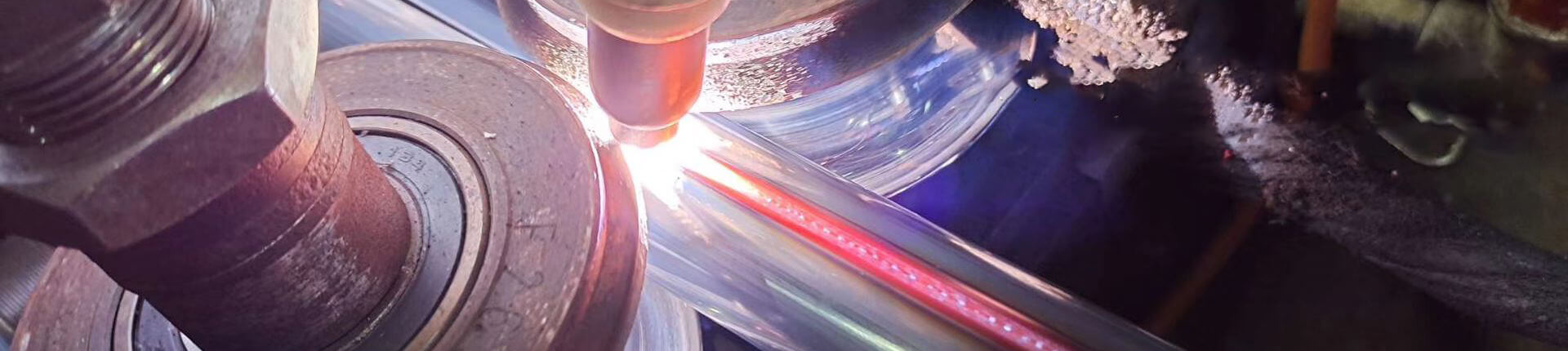


Humanized design stainless steel pipes are chosen not only for corrosion resistance and strength, but also for how they improve use, installation, cleaning, and maintenance.
Humanized design is a product-development approach, not a formal grade or manufacturing standard. It considers the people who will touch, install, clean, or maintain the finished tube. In practice, it may mean a comfortable handrail, an oval wardrobe tube, or a retail display with accurate lengths and repeatable polishing.
A useful design concept must become measurable requirements.
| Design feature | Practical benefit | RFQ requirement |
| Smooth edges | Safer handling and less grinding | Edge condition |
| Accurate dimensions | Better fit with connectors | OD or width and height tolerance |
| Controlled straightness | Faster alignment | Straightness per meter |
| Suitable finish | Easier cleaning and consistent appearance | Brushed, satin, mirror, or polished |
| Pre-fabrication | Less work on site | Cut length, bend, or hole position |
A human-centered specification should deliver:
*Safer use through smooth edges and stable support.
*Better ergonomics where people grip, hang, lean on, or touch the tube.
*Faster installation through controlled dimensions and pre-fabrication.
*Easier maintenance through suitable grades and cleanable surfaces.
These outcomes reduce hidden costs caused by correcting length variation, removing burrs, or repolishing surfaces.
This approach is especially useful where tubing remains visible, receives frequent contact, or must fit other components precisely.
Handrails and balustrades require more than structural strength. Tubes should feel comfortable, maintain a uniform finish, and connect cleanly to posts and brackets.

YUHUA’s oval wardrobe rail product uses 410S/430 stainless steel, a polished surface, and customizable lengths. The oval profile is intended for hanging applications and can be used in hotel wardrobes, retail displays, closets, and custom furniture.
For retail fixtures, finish, dimensions, and cut lengths should remain consistent across batches. This is particularly important when the same display system is installed in several shops or produced over multiple purchasing cycles.
In hotels and public interiors, brushed or satin finishes are often practical because minor marks are less visible than on mirror-polished surfaces.
Outdoor projects require closer grade selection. Grade 304 is widely used for general architectural and decorative work. Grade 316 or 316L is more appropriate where coastal air, chlorides, chemicals, or persistent moisture increase corrosion risk.
Selection depends on environment, load, fabrication, appearance, and maintenance.
Grade 304 works well for indoor furniture, handrails, decorative structures, and general architectural projects. The material supplies good corrosion resistance, along with solid weldability and polishability.
Grade 316 or 316L includes molybdenum. This addition delivers better resistance in chloride-bearing or chemically aggressive settings. The low carbon content in 316L also helps welded applications. It lowers the chance of corrosion issues around heat-affected zones.
Grades 410S and 430 can fit certain decorative, wardrobe, or furniture uses. This holds true when the material properties align with the service environment. Buyers need to review humidity levels, cleaning procedures, and expected service life instead of focusing only on price.
Round and oval tubing supports comfortable gripping. They are also suitable for wardrobe rails because they create distinctive appearances and consistent orientations for hanging hardware.
Square and rectangular tubes provide flat surfaces for joining and frame construction. YUHUA’s 304 square tube is offered with selectable wall thicknesses and an annealed surface, making it relevant to furniture frames, handrails, trims, and displays.

Select the profile together with brackets, connectors, weld details, and load requirements. An attractive profile may not be practical if suitable fittings or mounting components are unavailable.
Brushed and satin finishes suit frequently touched surfaces because they balance appearance with practical maintenance. Mirror finishes create a stronger decorative effect but require careful handling and cleaning.
Polished surfaces are common in furniture and wardrobe products. Annealed surfaces can support fabrication and later polishing. For appearance-critical orders, buyers should approve a physical surface sample before production. The approved sample can then be used to evaluate gloss, polishing direction, surface consistency, and acceptable visual variation.
Correct grade and size are not enough if tolerances, edges, weld quality, or surface protection are poorly controlled.
An RFQ should state:
*Outside diameter or profile width and height.
*Wall thickness and permitted variation.
*Cut length and tolerance.
*Straightness requirement.
*Corner radius for square or rectangular profiles.
*Burr removal, edge condition, and end protection.
YUHUA’s 304 square tube specification includes ±0.13 mm on the outer dimensions and straightness of no more than 1.5 mm per meter. Such data gives designers and inspectors clear acceptance criteria.
Edge condition is also important. Uncontrolled burrs can create handling risks and interfere with brackets or end caps. Buyers should specify whether tube ends must be deburred, protected, polished, or prepared for welding.
Pre-cut, pre-bent, or pre-drilled tubes can reduce site labor when drawings are complete. Buyers should provide bend angle, centerline radius, hole diameter, hole position, and orientation.
For welded decorative tubing, weld integrity and surface quality should be checked together. YUHUA’s ASTM A554 welded tube information includes eddy current testing, material traceability, and mill test certificates. These controls are relevant for handrails, frames, and visible architectural components.
Pre-fabrication can improve installation efficiency, but dimensions must be based on approved drawings. Incorrect hole positions or bend directions may make otherwise acceptable tubes unusable.
Approval should cover grade, dimensions, wall thickness, straightness, cut length, weld condition, finish, packaging, and agreed documents. A sample should represent the production material, profile, finish, and packaging.
For decorative products, inspection should include both measurable and visual criteria. Surface scratches, polishing lines, weld marks, dents, and color differences may affect acceptance even when dimensions are within tolerance.
Protective packaging should also be reviewed. Visible surfaces may require protective film, waterproof wrapping, separation between pieces, or export-ready packaging to reduce damage during handling and transportation.
A complete inquiry supports accurate quotations and prevents assumptions.
Include:
*Material grade and applicable standard
*Tube profile and outside dimensions
*Wall thickness, length, and tolerances
*Surface finish and sample reference
*Quantity and delivery schedule
*End use and installation environment
*Cutting, bending, welding, or drilling requirements
*Inspection documents and packaging expectations
An indoor wardrobe and a coastal handrail may need different grades or finishes. Explaining the final application allows the supplier to identify potential conflicts before production begins.
Drawings should show critical dimensions, hole locations, bend orientation, weld positions, and visible surfaces. When drawings are unavailable, a physical sample can help communicate the required profile and finish.
Supplier evaluation should cover profile range, tolerance control, welding and polishing capability, inspection methods, custom fabrication, packaging, and lead time.
YUHUA’s product information lists ASTM A554 welded tubes in grades including 201, 304, 304L, 316, and 316L, with round, square, and rectangular options and mirror, brushed, or matte finishes. Final orders should still be confirmed against project drawings and current production availability.
Total cost includes material, finishing, custom processing, inspection, packaging, freight, and installation labor. Good specifications can reduce rework even when the initial price is not the lowest.
Before selecting a supplier, buyers should confirm:
*Whether the required grade, profile, and finish are available.
*Whether dimensional tolerances can be maintained in mass production.
*Which inspection methods and documents will be supplied.
*How visible surfaces will be protected.
*Whether production and shipping schedules meet the project deadline.
A: Controlled dimensions, straightness, clean ends, and optional cutting, bending, or drilling help parts fit brackets and connectors more accurately. This can reduce site grinding and corrective fabrication.
A: Brushed and satin finishes are practical for frequently touched surfaces. Mirror finishes create a stronger visual effect but need more careful handling and cleaning.
A: Send the grade, standard, profile, dimensions, wall thickness, length, tolerances, finish, quantity, application, fabrication details, inspection requirements, packaging method, and delivery schedule. Drawings and approved samples improve quotation accuracy.
 Address: Muyuan Industrial Zone, Shishan Town, Nanhai District, Foshan City, Guangdong Province
 Call us now:+86 13751499396
 Email:546980277@qq.com


Foshan Nanhai Yuhua Hardware Products Co., Ltd.佛山市南海誉华五金制品有限公司