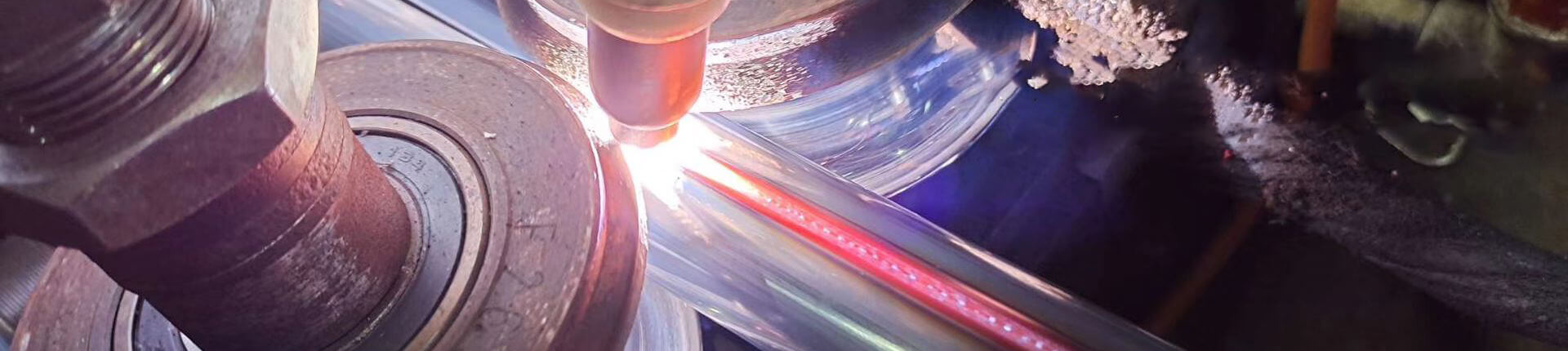


Selecting the correct stainless steel pipe for your requirements extends beyond simply choosing a grade. There are a number of critical factors that need to be considered, including the method of manufacture, the pipe profile, the wall thickness, the finish, tolerance, the relevant standard, and the service conditions.

A stainless steel pipe is a hollow product made from corrosion-resistant steel alloy. When sourcing in B2B marketplaces, “type” can refer to grade, production method, shape, finish, or tolerance.
| Classification factor | Common options | Main concern |
| Grade | 201, 304/304L, 410, 316L | Corrosion resistance |
| Manufacturing | Seamless, welded, ERW | Pressure and weld quality |
| Shape | Round, square, rectangular | Load and assembly |
| Finish | Annealed, brushed, polished, matte | Appearance |
| Tolerance | Standard or precision | Fit and alignment |
A full specification for tubes includes grade, full dimensions, wall thickness, length, method of manufacture, finish, tolerances, standard, and intended use. Surface finish and packing for visible items, and straightness and cut length tolerance for items to be assembled automatically, are also included.
When purchasing pipe, it is often specified by nominal size and schedule. A tube is often specified by exact outside diameter and wall thickness. It is very important to specify exactly what you are looking for to avoid confusion.
There is no single grade that is appropriate for all applications. Selection of a grade is a function of moisture, chlorides, corrosive materials, welding procedures, fabricating methods, required strength, and cost.
| Grade | Main advantage | Typical use | Limitation |
| 201 | Cost control | Indoor decoration and furniture | Lower corrosion resistance than 304 |
| 304/304L | Balanced fabrication and corrosion resistance | Architecture and general industry | Limited in severe chlorides |
| 410 | Hardness and strength | Machinery and selected structures | Less corrosion-resistant than 304 |
| 316L | Better chemical and chloride resistance | Marine and chemical use | Higher cost |
Grade 201 is suited to indoor, decorative, and light structural applications with moderate exposure. Grade 201 is available in a number of profiles and surface finishes to suit applications such as furniture frames, displays, interior railings, and general decorative work and other related projects. It is generally used as a cost-effective alternative to 304 where it will not be exposed to wet, saline, or chemically aggressive environments.
Grade 304 has good corrosion resistance, excellent weldability, good formability, and a bright, attractive surface finish. It is used for handrails, equipment frames, food processing equipment, car trim, exhaust systems, and decorative features.
For applications that require greater strength, hardness, or aesthetic appeal but do not require maximum corrosion resistance, grades 410 and 430 are suitable. YUHUA Oval 410S/430 wardrobe rail tubing is ideal for closet organization systems, hotel closet storage, closet displays for the retail industry, and custom furniture makers.

For use in areas where there is exposure to chlorides, such as in marine environments, in chemical plants, or pharmaceutical plants, etc. 316L is generally the stronger material. It has molybdenum, which provides the material with good pitting and crevice corrosion resistance, plus low carbon, which is important for weldability.
How a component is made affects its pressure rating, dimensions, surface finish, and cost.
| Type | Best suited for | Verify |
| Seamless | Pressure and process systems | Wall consistency and standard |
| Welded | Architectural and decorative work | Weld and surface quality |
| ERW | Volume-based tubing | Seam integrity and dimensions |
Seamless tubing is selected in those cases where a specification does not allow a longitudinal weld or when there are very high pressure, temperature, or processing requirements.
Seamless does not automatically mean tighter tolerances. In addition to outside-diameter tolerance, wall-thickness tolerance, ovality, and straightness, buyers must also specify testing and governing standard.
Welded and ERW products suit handrails, frames, furniture, machinery guards, automotive trim, exhaust parts, and architectural applications. They support efficient production and a wide choice of finishes and profiles.
For ASTM A554 welded tubes, the following checks are useful: eddy-current tests, optional hydrostatic tests, material traceability, and mill test certificates.
The shape of the component follows the functional load, the connection type, and the visual requirements. The surface finish follows the installation environment and the maintenance policy.
Tubing – round – is very efficient at distributing stress. It is very easily bent and can be very easily clamped and connected. The tubing is commonly used in fluid lines, handrails, exhaust systems, and also in many of the instrument parts. It can also be used in curved or unusual frames. Information for tubing should include the outside diameter, the wall thickness, the length, the finish, and the tolerance. For example, instead of ordering a 2-inch stainless steel pipe, it is better to order tubing with the above specifications.
Square sections have flat faces, which make welding and joining easier. Rectangular sections have different depth sections to deal with loads acting in one direction. Use for Furniture, Equipment Supports, Machinery Guards, Handrails, and Displays.
Measurable dimensions matter more than a general quality request. A supplier of furniture made from 20 × 20 mm square tubing could, for example, be asked to specify straightness, outside-dimension tolerance, corner radius, and cut length for better fixture adjustment and better welding. All this within a general quality request for “high quality” would not have worked.
Classy stainless steel pipe is just another term for decorative tubing of a higher quality appearance than most ordinary tubing. Typically, mirror, brushed, satin, or matte-finish stainless steel tubing may be used for higher-end projects. Additionally, it is common for YUHUA, which specializes in classy stainless steel pipe, to offer Premium quality items with smooth welds and a uniform surface finish. Also, premium classy stainless steel pipes are typically cut to exact lengths with square cut ends and very carefully packaged to prevent scratching or bending.
For appearances, stainless steel tubing is used in hotel interiors, in luxurious closets, as visible handrails, in light fixtures, in retail displays, and in furniture. Even when tubing is highly polished, it will not be corrosion-resistant if the grade is not suitable for the environment in which it is applied.
A reliable sourcing sequence is:
*Define the environment and application.
*Select grade, method, and shape.
*Confirm dimensions, wall thickness, and length.
*Set finish and measurable tolerances.
*Name the standard and inspection documents.
*Confirm processing, packing, quantity, and delivery needs.
A high-precision positioning SS pipe can be used for components that need to be assembled in precise positions over and over again, such as the frames for automated machinery, components for modular furniture, welding fixtures, machine supports, and exposed architectural structures.
In addition to the required information on outside-dimension tolerance, wall variation, straightness, squareness, twist, corner radius, and cut-length tolerance, for square/rectangular profiles, this information affects jig fit and the levelness of the welded assemblies. High precision is only acceptable if clearly defined by exact limits and by a method of inspection.
The proper standard must apply. Typically, welded mechanical tubing is covered by ASTM A554, but pressure or process applications would probably call for another standard. When purchasing tubing, ensure that the following apply: grade, chemical composition, mechanical properties, size, welds inspected, surface finish, and traceability.
A complete RFQ should include:
*Grade and shape
*Dimensions, wall thickness, and length
*Surface finish and tolerances
*Manufacturing method and standard
*Testing and certificate requirements
*Processing, quantity, application, and packing
These details will enable YUHUA to more accurately process your request and minimize revisions required after sampling.

A: No. Seamless tubing is used for particular pressures and processes. For structural, decorative, or high-volume work, welded tubing is more practical.
A: Use round tubing for flow, bending, and for rails and other evenly loaded members. Use square tubing for simple frames and for easy connection points. Use rectangular tubing for maximum directional stiffness.
A: A mirror finish looks great, a brushed finish hides light marks and scratches very well, and a Matte finish has minimal reflection.
 Address: Muyuan Industrial Zone, Shishan Town, Nanhai District, Foshan City, Guangdong Province
 Call us now:+86 13751499396
 Email:546980277@qq.com


Foshan Nanhai Yuhua Hardware Products Co., Ltd.佛山市南海誉华五金制品有限公司